The Korean apartment interior for this 30-pyeong (approx. 1000 sq ft) home masterfully blends wood and stone elements, reinterpreting a 1994 two-bay structure with modern aesthetics. The design unifies the entryway, hallway, kitchen, and flooring in a consistent wood tone, accented by white stone-inspired walls and gray tiles for a sophisticated, warm ambiance.
What's the Core Concept of This Korean Apartment Interior?
The defining characteristic of this K-interior project is the harmonious interplay between warm wood tones and refined stone textures. A unified wood color palette flows from the entryway through the hallway and into the kitchen cabinetry and flooring, creating a cohesive feel. The high-end, custom-designed swing door, featuring fabric-textured glass and wood film frames, significantly elevates the space's luxury. Large 600x600mm porcelain tiles were chosen for the entryway, balancing durability with a sophisticated look.
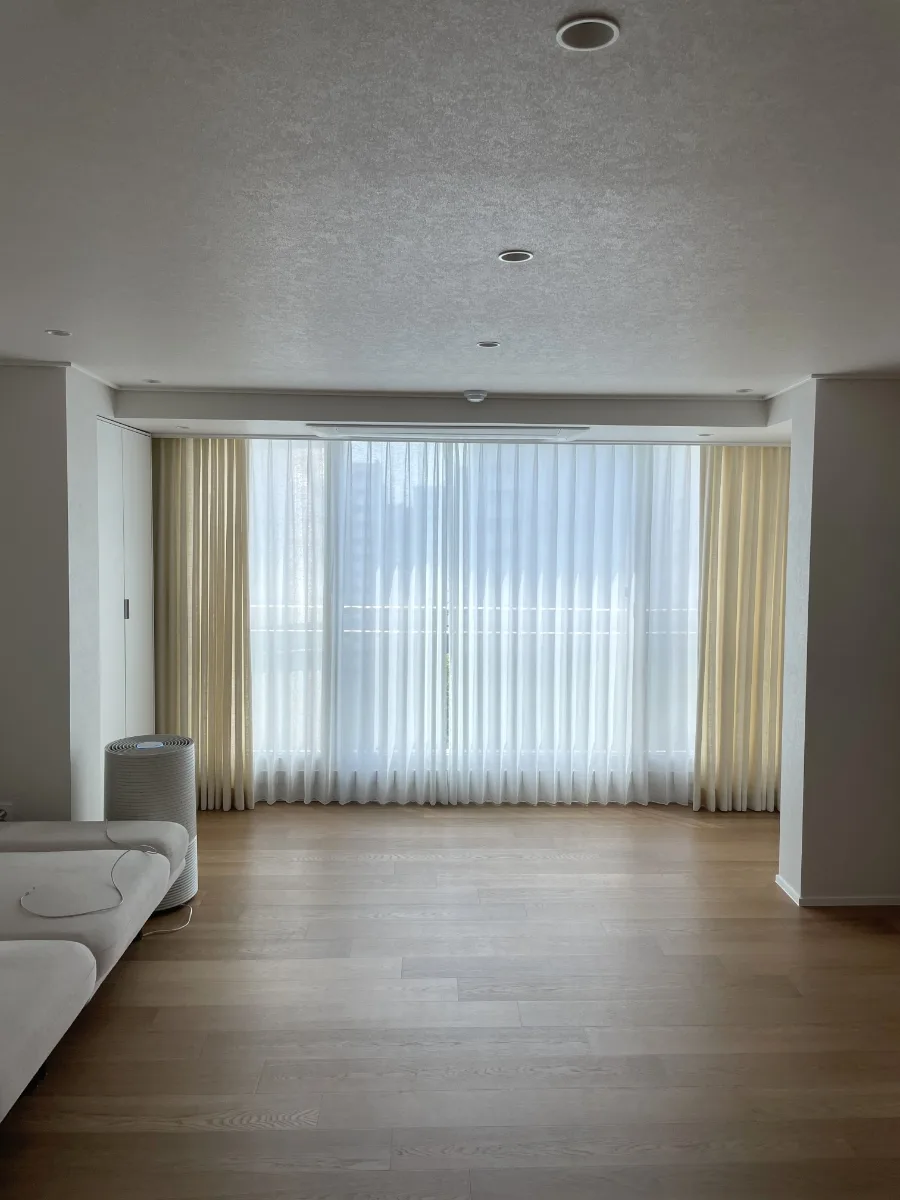
In the living room, a minimalist approach is taken with a white main wall and a slim 9mm door frame design, allowing the wood-toned furniture to blend seamlessly for a clean, organized aesthetic. The existing windows were already updated by the homeowner, so they were not part of this renovation.
How to Maximize Space in Korean Kitchens and Bathrooms?
The kitchen layout was transformed from an 'L' shape to a more open and functional 'I' shape. To compensate for the reduced counter space, additional lower cabinets were installed near the entrance, effectively creating a secondary kitchen area. This design not only enhances functionality but also improves the overall flow and visual spaciousness of the kitchen. For the bathroom, a sophisticated travertine porcelain tile (600x600mm) was used throughout, lending a luxurious and cohesive feel. This thoughtful approach to layout and material selection maximizes usability and aesthetic appeal in key areas of the home.
What Are Smart Ways to Divide Space in a Korean Bedroom?
To enhance privacy and functionality within the master bedroom, a partition wall was strategically installed. This division creates a distinct separation between the sleeping area and other zones, such as a walk-in closet or a vanity area. This not only allows for more efficient use of space but also provides a sense of personal sanctuary within the larger room. This technique is common in Korean apartment design to create multi-functional spaces within limited square footage, offering flexibility for different activities and needs without the need for extensive structural changes.
How Do Rising Material Costs Impact Korean Interior Design Projects?
The current trend of increasing interior material costs presents a significant challenge for homeowners planning renovations. This rise in prices can lead to budget overruns and necessitate careful financial planning. It's crucial for clients to anticipate potential cost increases and allocate a contingency fund. When selecting materials, a balance between aesthetic desires, durability, and budget is essential. Consulting with interior design professionals can help navigate these challenges, ensuring that projects remain within a realistic financial framework while still achieving a desirable outcome. Prioritizing essential upgrades and exploring cost-effective alternatives are key strategies in today's market.
English crawl path
Next English reads from this pilot cluster
Continue through the category hub, latest English stories, and related posts so this translated article is not an isolated URL.
Tags
💬Frequently Asked Questions
What should I check first in Korean Apartment Style 2026: Wood & Stone Harmony?
Does this Home & Interior article link back to the Korean source?
Where can I find similar English stories?
English discovery path
Explore more English K-culture stories
Keep browsing the indexed English pilot cluster so Google and readers can move between this story, the category hub, and fresh discovery pages.
Original Source
Read the Korean original