Dreaming of a Korean-inspired apartment aesthetic? While this project is in Warsaw, Poland, it showcases the universal appeal of blending historical charm with bold, modern Korean minimalism. Polish designer Katarzyna Baumillar transformed a century-old apartment, erasing war scars and infusing it with vibrant colors and contemporary design, offering a masterclass in creating a unique, stylish living space that resonates with the clean, intentional feel of K-interior design.
How a 100-Year-Old Warsaw Apartment Shed War Scars for Modern Color
In a remarkable feat of interior design, Katarzyna Baumillar breathed new life into a historic Warsaw apartment, over a century old and bearing the scars of World War II. This project transcended mere decoration; it was an archaeological exploration of the past, reinterpreted through a contemporary lens. Baumillar focused on erasing the physical and psychological imprints of conflict, infusing the space with vibrant hues and modern design elements. The relative lack of ornate architectural details from its original era provided a unique canvas, allowing the designer to honor the building's heritage while boldly stepping away from convention. This renovation wasn't just about preserving history; it was about consciously bidding farewell to a difficult past and writing a new, colorful chapter. The designer masterfully juxtaposed original elements like rich plaster moldings, classic flooring, and traditional wooden doors with modern materials such as reflective tiles and vibrantly lacquered steel, adding layers of complexity to the apartment's bourgeois character.
The Perfect Ensemble: Harmony of Tradition, Color, and Custom Furniture
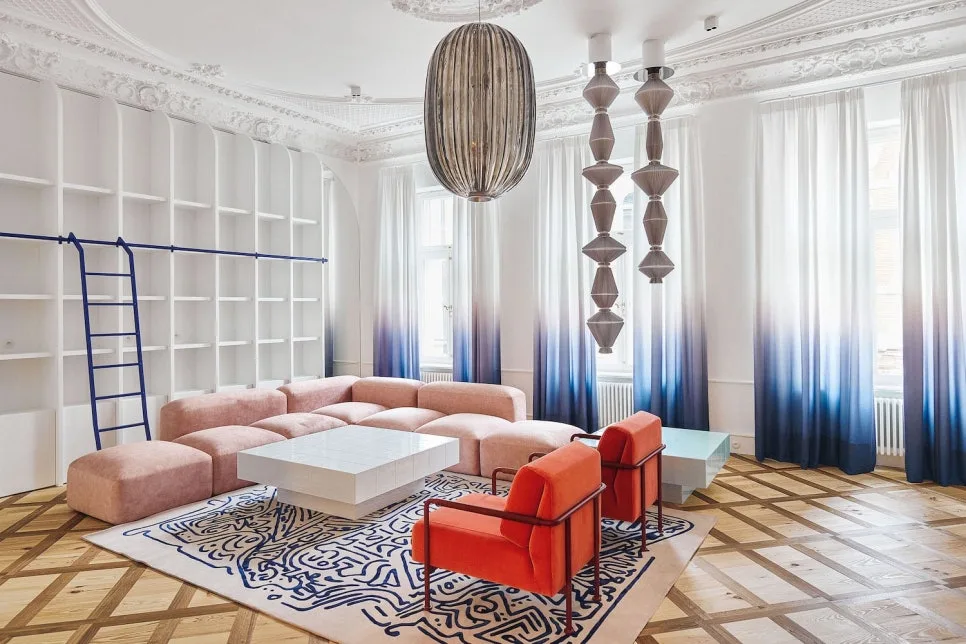
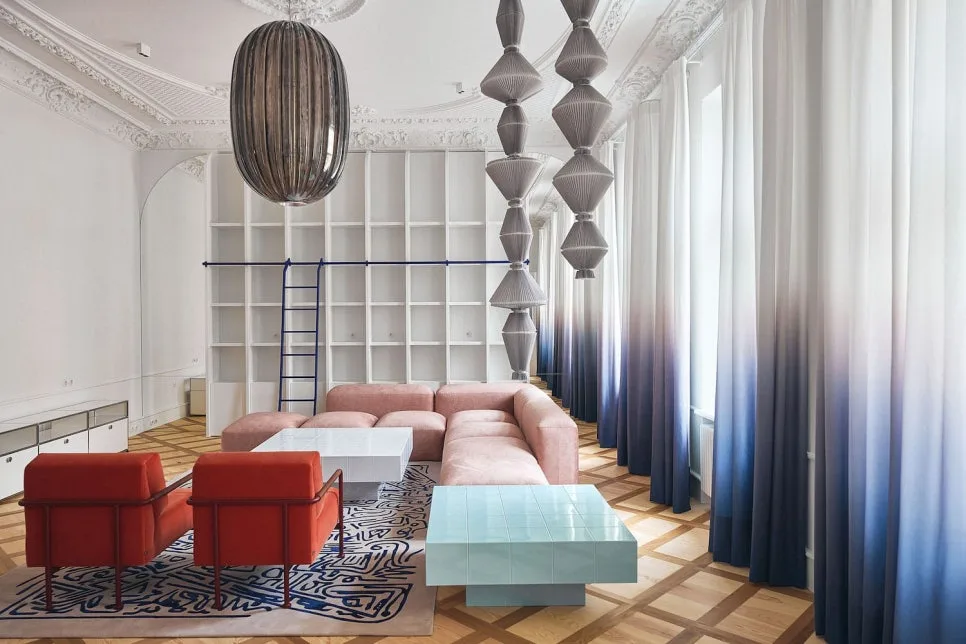
Baumillar's genius lies in her ability to fuse traditional architectural features with a distinctly modern design language, creating a truly unique living environment. Custom-designed furniture, characterized by geometric and abstract forms, injects a contemporary flair into every room. The project's cornerstone is its daring use of color: against a backdrop of crisp white walls, three primary hues—pink, indigo, and purple—interplay harmoniously, breathing life and energy into the space. These colors are intelligently applied to the playful, sensual, and sculptural furniture choices. For instance, the kitchen, featuring a floor-to-ceiling bookshelf and a light pink work island, exemplifies this chromatic strategy. In the living area, a striking 'Steaming Cucumber' lamp by Atelier Oi for Parachilna commands attention, complemented by the soft movement of ombre curtains throughout the apartment. These elements evoke the playful spirit of the 1970s Memphis Group, the futuristic, plastic-like curves of the Space Age, and the formal modernity of Danish design, imbuing the space with a distinct and captivating personality. This approach aligns perfectly with the Korean aesthetic's emphasis on intentionality and curated visual appeal, making it a prime example of K-interior principles.
Key Considerations for Renovating Historic Apartments Like This Warsaw Gem
This Warsaw apartment renovation offers valuable insights for anyone looking to modernize older spaces with a Korean-inspired aesthetic. Firstly, striking a balance between preserving historical elements and reinterpreting them for modern living is crucial. The designer respected the original plaster moldings, flooring, and doors while enhancing them with contemporary materials and bold colors to avoid a dated feel. Secondly, the strategic use of color is paramount. Employing a limited palette—pink, indigo, and purple—created a cohesive yet vibrant atmosphere. Thirdly, the importance of custom furniture cannot be overstated; tailored pieces, especially those with geometric or abstract designs, significantly elevate the space's modern appeal. Finally, while embracing bold colors and modern forms, it's essential to consider practicality and livability, ensuring the design enhances, rather than hinders, daily life. This thoughtful integration of past and present, color and form, is the hallmark of sophisticated K-interior design.
For more details on this inspiring renovation, explore the original source.