Transform your 33-pyeong (approx. 1,100 sq ft) older apartment kitchen into a functional home cafe and study space with smart storage furniture placement. This guide shares real-world experience on maximizing space and fostering family connection through thoughtful interior design.
How to Create a Study-Cafe Kitchen in a 33-Pyeong Older Apartment?
To turn a 33-pyeong (roughly 1,100 sq ft) older apartment kitchen into a family-friendly study-cafe, a systematic storage plan is essential. The design philosophy here, often referred to as 'storage aesthetics,' goes beyond just storing items; it actively integrates storage into the overall space design. This approach maximizes the use of a typical 2-bay apartment layout, unifying the living room and kitchen into a cohesive, comfortable relaxation area. For instance, using sliding doors to connect the kitchen and a walk-in closet can expand the common space and create a visually larger feel. Incorporating elements like built-in bookshelves, platform seating, and benches harmoniously completes the cozy and functional cafe-like ambiance.
How to Design a Dining Kitchen Home Cafe Space?
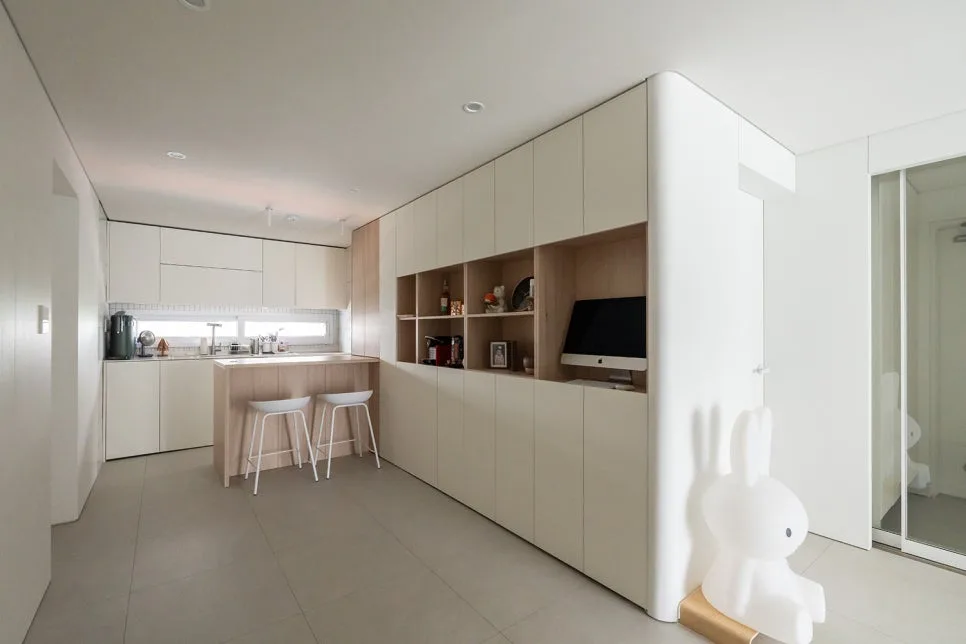
The original kitchen in this 33-pyeong apartment measured approximately 8 ft x 16 ft (2400mm x 4800mm). To transform it into a study-cafe dining kitchen, a system of wall-to-wall storage shelves was installed. These shelves not only provide ample storage for household items but also include lower cabinets, significantly boosting efficiency. To supplement the limited counter space, an island-style home bar was added, serving as both a prep area and a casual dining spot. A sink with built-in storage was placed near the window to maximize space utilization. This design creates a dining kitchen that offers various storage solutions and a cozy home cafe atmosphere. The process involved detailed 2D floor plans and furniture sketches, followed by 3D modeling to visualize the actual space before construction, ensuring the final result perfectly matched the design intent.
What Are the Pros and Cons of a Study-Cafe Kitchen Storage Interior?
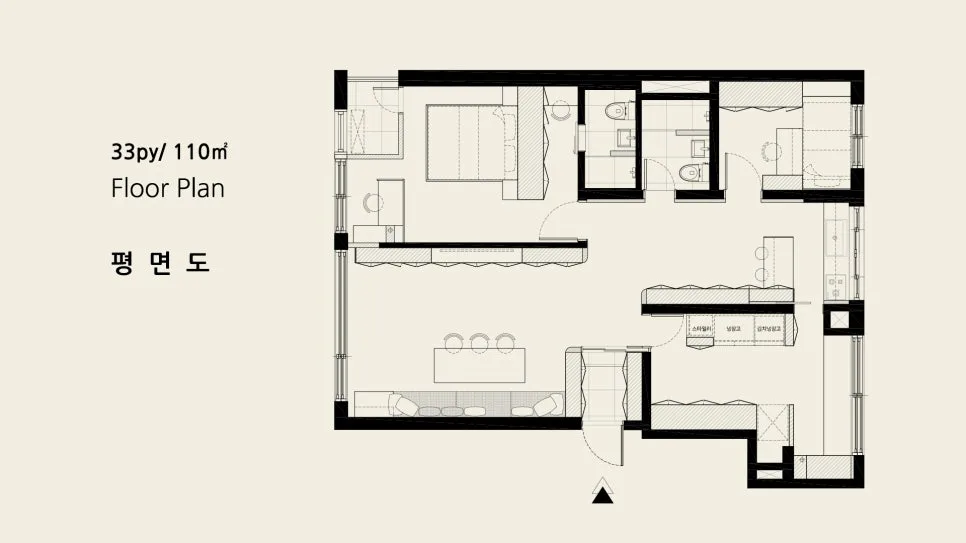
The primary advantage of a study-cafe kitchen storage interior is undoubtedly the maximization of space. Even in a limited area like a 33-pyeong apartment, built-in furniture and system storage units allow for neat organization of all belongings without wasting any space. Furthermore, by integrating the kitchen and dining areas and incorporating cafe-style furniture, it transforms into a multi-purpose space where families can gather, communicate, and relax, enhancing overall quality of life. However, this type of custom storage furniture and space design can involve a higher initial investment compared to purchasing standard furniture. Additionally, structural changes to the space or custom furniture fabrication require a significant amount of time and professional design expertise.
What Should You Consider When Placing Kitchen Storage Furniture?
When designing a study-cafe kitchen in a 33-pyeong older apartment, the most crucial consideration is the 'flow' of movement. Furniture should be arranged to ensure natural transitions between the cooking area, sink, home bar, and storage spaces. For example, frequently used ingredients and cooking utensils should be placed near the cooking zone, while home cafe supplies should be near the bar. It's also important to balance open and closed storage solutions to prevent the space from feeling cluttered. Ensuring adequate natural light and ventilation is also key to creating a comfortable and inviting environment.
For more details, check the original source below.