Discover the latest Korean apartment interior design trends for 2026, focusing on minimalist aesthetics and smart home integration. This guide offers expert suggestions for creating a more comfortable and stylish living space, inspired by popular K-interior styles. We'll explore how to maximize functionality and beauty in your home, drawing parallels with Western design principles while highlighting unique Korean approaches.
What is the 'Korean Aesthetic' in Home Interior Design?
The Korean aesthetic in interior design, often referred to as K-interior, emphasizes clean lines, natural materials, and a sense of calm and order. It's heavily influenced by Korean minimalism, which prioritizes decluttering and creating functional, serene spaces. Unlike some Western approaches that might favor ornate details or bold statements, K-interior leans towards understated elegance. Think of the popular Muji style, but with a distinctly Korean sensibility that often incorporates warmer wood tones and subtle pops of color. This approach aims to create a sanctuary that promotes well-being and reflects a mindful lifestyle. For instance, instead of a cluttered gallery wall, you might find a single, well-chosen piece of art or a beautifully arranged shelf. The goal is to achieve a harmonious balance between form and function, making everyday living feel more peaceful and intentional. This philosophy is increasingly resonating with US consumers seeking a more tranquil home environment, leading to a rise in searches for 'Korean apartment style' and 'Korean aesthetic room'.
How to Design a Functional & Spacious Korean-Style Kitchen and Living Room?
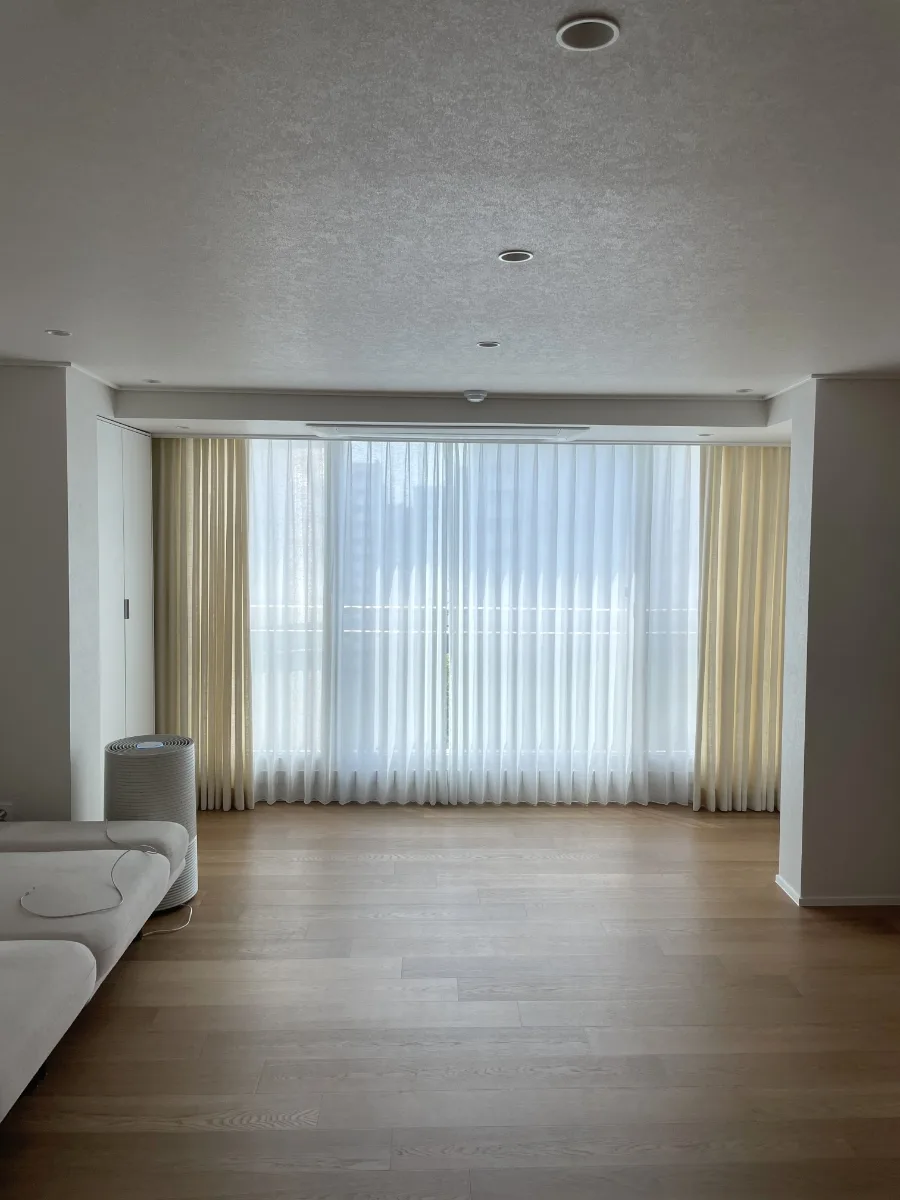
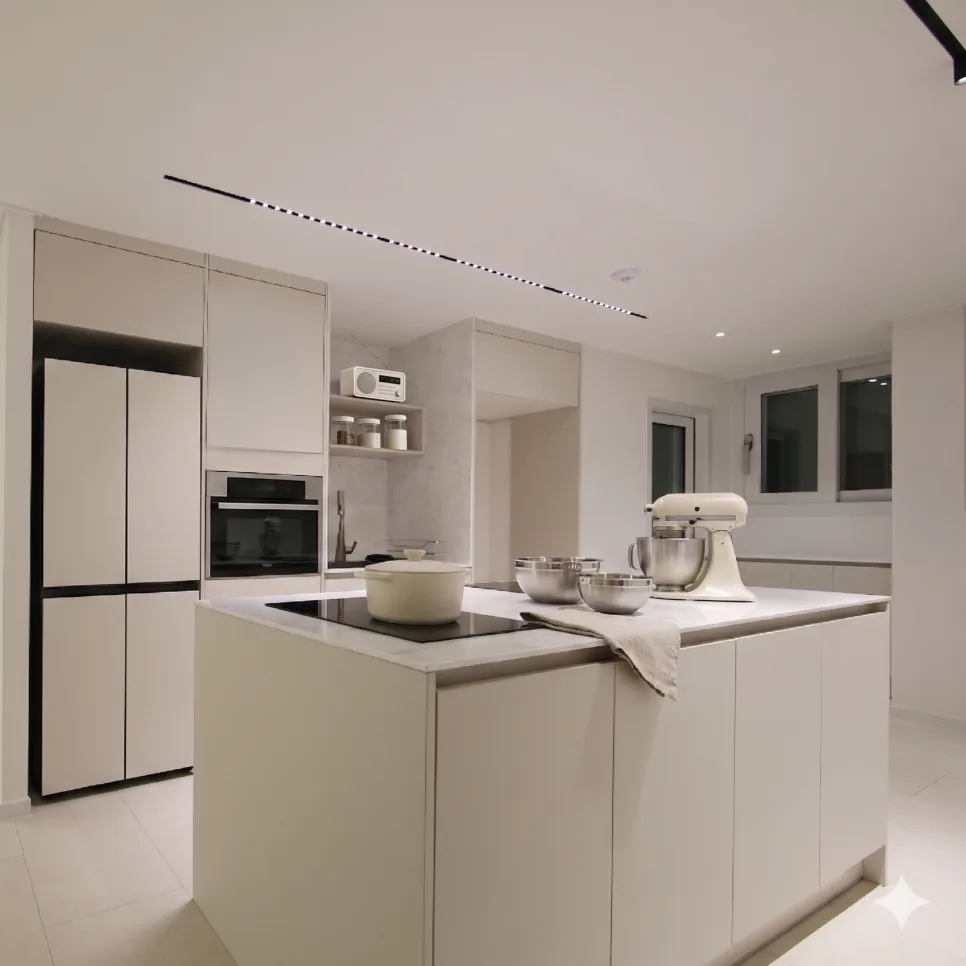
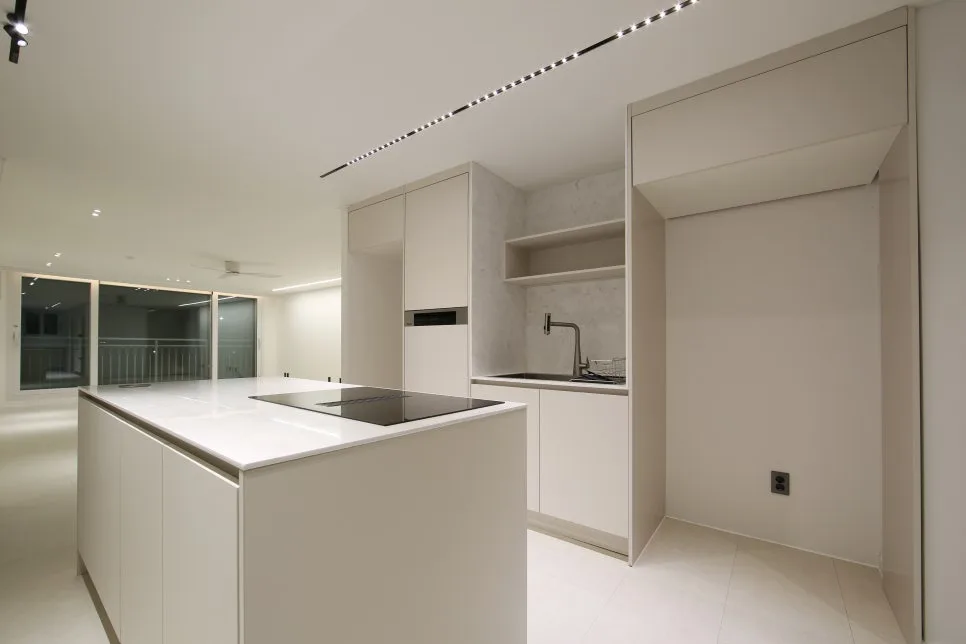
When designing a Korean-inspired kitchen, the focus is on creating a clean, bright, and highly efficient workspace. A popular approach involves using a predominantly white color palette for cabinets and countertops, creating a sense of spaciousness and cleanliness. Integrating an island with built-in cooking and storage functions is key, as it maximizes both prep space and organization. This island can serve as a casual dining area, reducing the need for a separate table in smaller apartments. For a touch of modern elegance, consider a waterfall-edge countertop or a sleek, minimalist faucet design. Magnetic lighting systems, similar to those found in high-end hotels, can add a sophisticated ambiance. In the living room, the aim is to create a bright, balanced, and comfortable atmosphere. Combining soft white and ivory tones fosters a sense of harmony. Installing a ceiling fan not only aids air circulation but also adds a stylish visual element. For a streamlined look, consider recessing your TV into the wall, eliminating the need for bulky entertainment units. Maximizing natural light and creating a seamless flow between indoor and outdoor spaces, such as a balcony or patio, further enhances the feeling of openness. This often involves using large windows or glass doors and incorporating elements like a stylish, space-saving sliding door (중문 - jungmun) to partition spaces when needed, similar to how Western designers might use pocket doors or room dividers.
Achieving a Luxurious & Organized Korean Bathroom and Entryway?
Korean bathrooms often exude a sense of spa-like luxury and meticulous organization. A popular design choice involves using sophisticated gray tones for tiles and fixtures, creating a calm and refined atmosphere. Modern, angular hardware, such as door handles and faucets, adds a contemporary edge. Integrated lighting, like subtle under-cabinet LEDs in the vanity or behind mirrors, enhances the ambiance and highlights displayed items. A wall-mounted vanity or a floating shelf can create a sense of spaciousness and make cleaning easier. For the entryway, the goal is to create a bright and welcoming first impression. White or light-colored walls help to maximize light. Incorporating a full-length mirror is practical for last-minute checks and visually expands the space. Floating shoe cabinets with built-in lighting are a common feature, offering discreet storage for frequently used footwear while maintaining a clean aesthetic. A semi-transparent sliding door (중문 - jungmun) is often used here as well; it provides a visual buffer, helps with temperature control, and adds a decorative element without completely blocking light, a design strategy that appeals to those looking for both privacy and openness, much like a frosted glass door in Western homes.
How to Design Cozy & Multifunctional Korean-Style Bedrooms?
Bedrooms in Korean interior design often prioritize creating a cozy, restful retreat. Similar to the living areas, a harmonious blend of white and soft, warm tones like ivory or light beige is common, promoting a sense of tranquility. The use of natural materials, such as light wood accents for furniture or decor, adds warmth and texture. To enhance functionality in smaller rooms, consider incorporating built-in elements or modular furniture that can adapt to different needs. For example, a custom-designed partition wall can subtly divide a larger room into distinct zones, such as a sleeping area and a small workspace or dressing area, without making the space feel cramped. This approach is akin to using room dividers or modular shelving units in Western interior design to create distinct zones within a single room. The emphasis is on creating a peaceful environment conducive to rest and relaxation, with thoughtful storage solutions to keep clutter at bay. This minimalist yet warm aesthetic is highly sought after by those looking to emulate the serene 'Korean apartment aesthetic' in their own homes.
For more details, check the original source below.