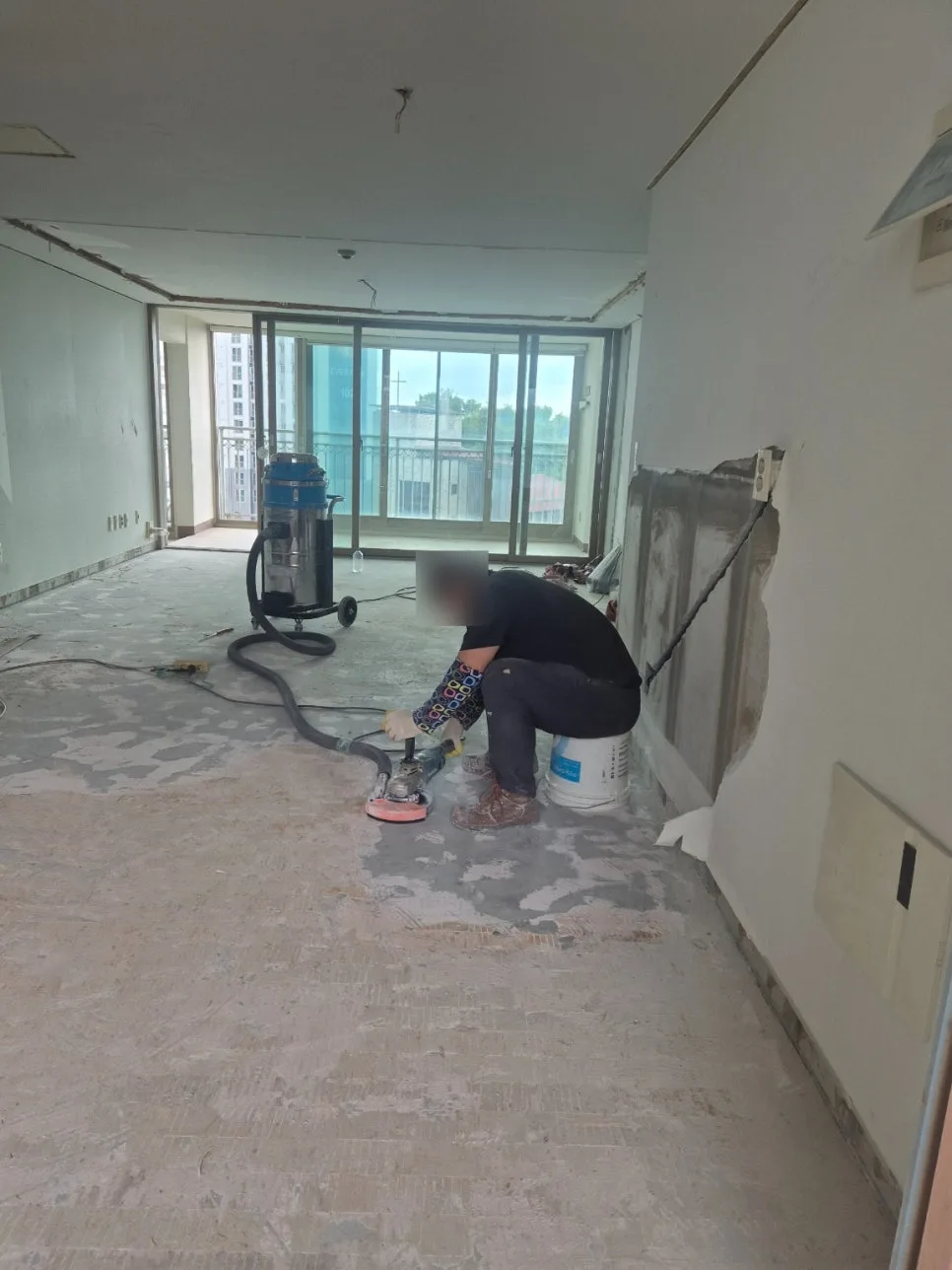
Planning a home renovation in your apartment? Achieving a flawless finish, especially with flooring, is crucial for the overall aesthetic and longevity of your space. This guide focuses on the essential step of floor leveling after removing old flooring, a key element in creating a modern Korean apartment style.
Why is Floor Leveling Essential After Old Flooring Removal?
When renovating, especially when removing older materials like laminate or vinyl, you'll often encounter stubborn adhesive residue. If this residue, often a yellowish, hardened glue, is left on the subfloor, it can create subtle imperfections. Installing new flooring directly over these uneven surfaces can lead to issues down the line, such as lifting, creaking, or hollow-sounding spots. To prevent these common problems and ensure a durable, aesthetically pleasing finish, a professional floor leveling process is indispensable. This involves using specialized equipment to create a perfectly smooth and even surface, ready for any new flooring material, from hardwood to tile.
What Professional Equipment and Techniques Are Used for Floor Leveling?
Achieving a truly level floor requires more than just scraping away old adhesive. Professional floor leveling utilizes specialized sanding equipment designed to efficiently remove stubborn residues and smooth out minor imperfections. These machines are paired with powerful dust extraction systems to maintain a clean work environment and protect air quality. For areas that are difficult for machines to reach, such as corners, edges, or around door frames, skilled technicians perform meticulous hand-sanding. This combination of advanced machinery and detailed manual work ensures that the subfloor is perfectly prepared, maximizing the adhesion and appearance of the new flooring.
What Potential Issues Can Arise During Floor Leveling?
The primary challenge during floor leveling is ensuring complete removal of all old adhesive and debris. Incomplete removal can lead to the aforementioned issues of lifting and noise with new flooring. Another concern is dust management; without a high-efficiency dust collection system, the sanding process can create a significant mess and pose respiratory risks. Additionally, areas that are hard to access with machinery, like tight corners or the base of door frames, require careful manual attention. If these spots are neglected, they can detract from the overall finish and potentially compromise the integrity of the new floor installation. Proper preparation and attention to detail are key to avoiding these pitfalls.
What Precautions Should Be Taken for Flawless Floor Installation?
To ensure a flawless floor installation after leveling, several precautions are vital. Firstly, confirm that all old adhesive and debris have been thoroughly removed, leaving a clean, smooth subfloor. Secondly, ensure that the dust collection system used during sanding is highly efficient to maintain a healthy environment and prevent residual dust from affecting the new flooring. Thirdly, verify that all edges and corners have been meticulously finished by hand. Finally, before installing new flooring, the surface must be completely dry and clean. Any remaining moisture or dust can compromise the adhesive bond, leading to future problems. Opt for contractors who demonstrate a commitment to perfection, ensuring the job is done right the first time.
Consult with professionals for detailed floor leveling information.