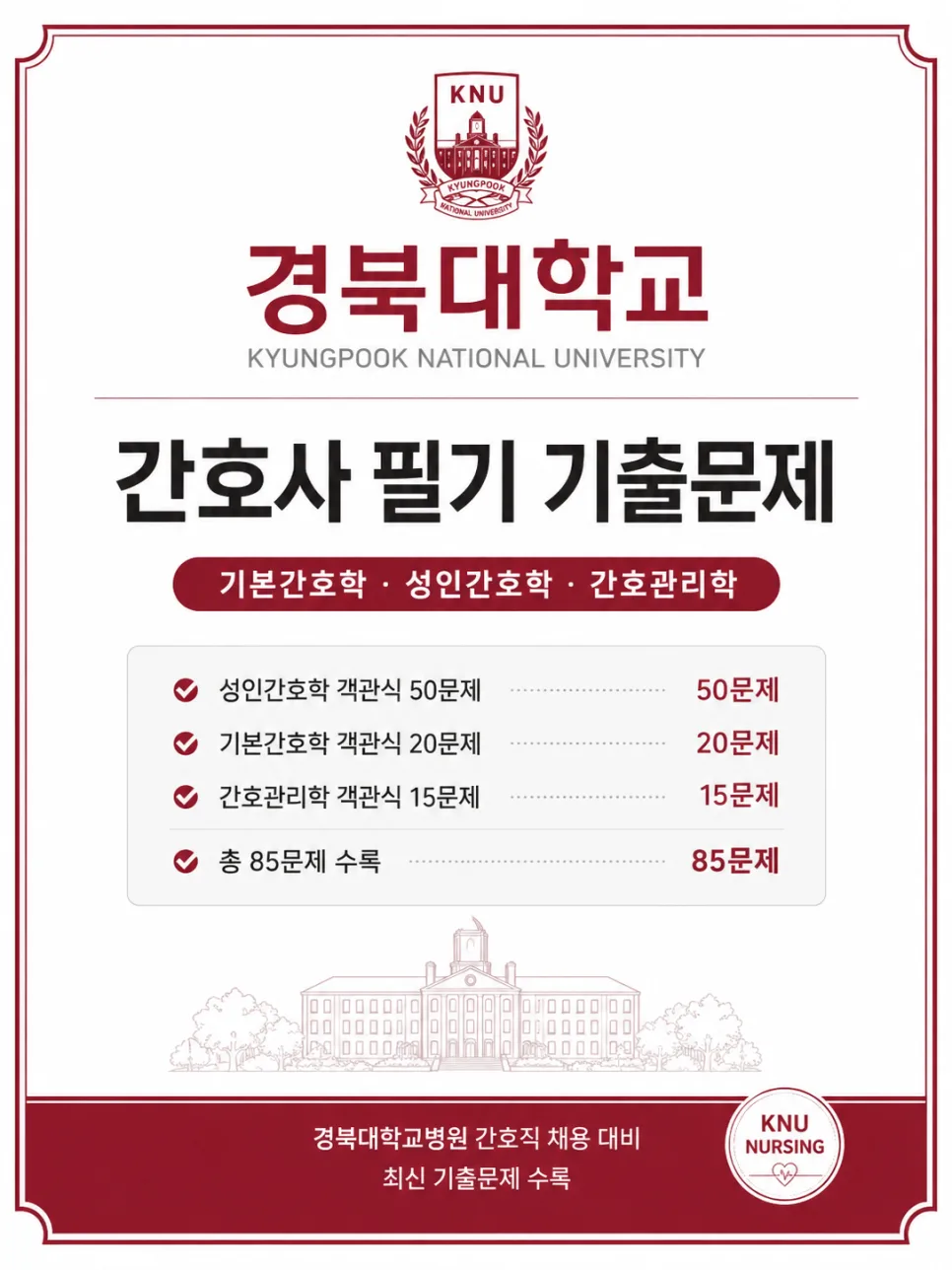
To succeed on the Korean nurse written exam in 2026, mastering 85 key past exam questions with detailed analysis is crucial. This guide breaks down the trends and strategies for adult nursing, fundamental nursing, and nursing management, focusing on priority-based scenarios and core concept questions to maximize your practical exam readiness.
What Types of Questions Appear on the Korean Nurse Written Exam?
The Korean nurse written exam primarily features questions from three core areas: adult nursing, fundamental nursing, and nursing management. The exam heavily emphasizes questions that test your ability to prioritize in real clinical situations and your understanding of core concepts through multiple-choice formats. For the 2026 hiring cycle, studying frequently tested concepts reflecting the latest nursing trends and hospital-specific characteristics is essential. Based on my experience, understanding the problem-solving process is more critical than simple memorization. For instance, understanding why low-concentration oxygen is slowly administered to a COPD patient relates to their respiratory drive mechanism. For acute myocardial infarction patients, assessing pain level and vital signs takes top priority due to the life-threatening nature of the condition. These questions often stem from actual patient cases, requiring you to apply knowledge systematically.
Adult Nursing Exam Questions: Key Concepts and Practical Strategies?
Related Articles
In adult nursing, questions frequently cover patient management and symptom understanding for major conditions like COPD, acute myocardial infarction, and heart failure. For example, using a low-flow nasal cannula (1-2 L/min) for oxygen therapy in COPD patients is appropriate due to their reliance on hypoxic drive. For acute myocardial infarction, assessing pain and vital signs is the top priority. Heart failure patients often present with crackles in their lungs. These questions assess your ability to accurately assess patient conditions and apply nursing interventions in the correct order. Studying the core pathophysiology, symptoms, diagnostic tests, and nursing interventions for each condition across the 50 practice questions is vital. Real exams may feature questions that combine these concepts, so developing problem-solving skills through diverse case studies is key.
Fundamental Nursing & Nursing Management: What to Focus On?
Fundamental nursing covers basic nursing principles, skills, patient safety, and infection control, directly related to practical application. With 20 questions allocated, this area evaluates a nurse's foundational competencies. Nursing management assesses knowledge of hospital organization, leadership, quality management, and legal aspects, with 15 questions. While these fields may not require the in-depth disease-specific knowledge of adult nursing, they cover essential concepts underpinning nursing practice. Key topics include environmental adjustments for fall prevention and the '6 Rights' of medication administration to reduce errors. In nursing management, understanding nursing fee structures, workforce management, and the importance of Quality Improvement (QI) activities is crucial. Prior experience in a hospital setting can provide an advantage here.