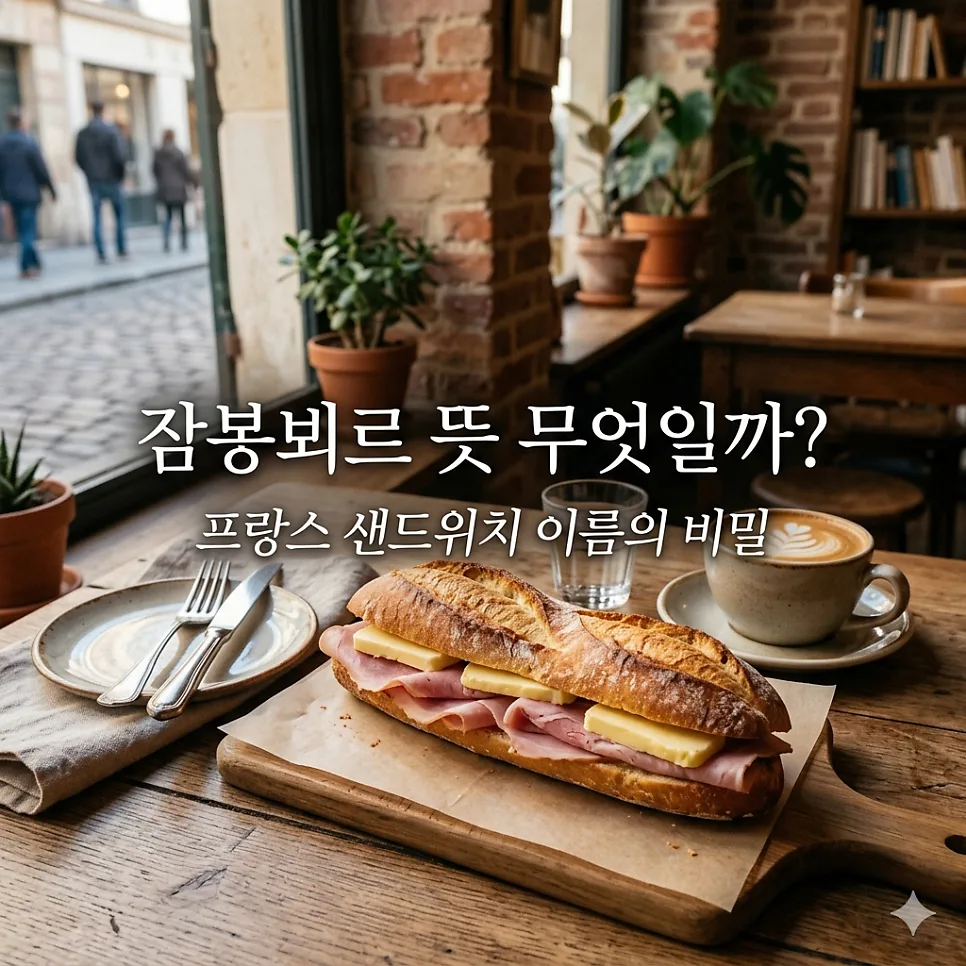
Jambon-beurre, a French term meaning 'ham and butter,' is a classic sandwich made with ham and butter nestled inside a baguette. This simple yet elegant sandwich is poised to remain a popular cafe menu item in 2026. This guide breaks down its ingredients, characteristics, and tips for choosing the best one.
What Does Jambon-Beurre Mean? The French Origin Explained
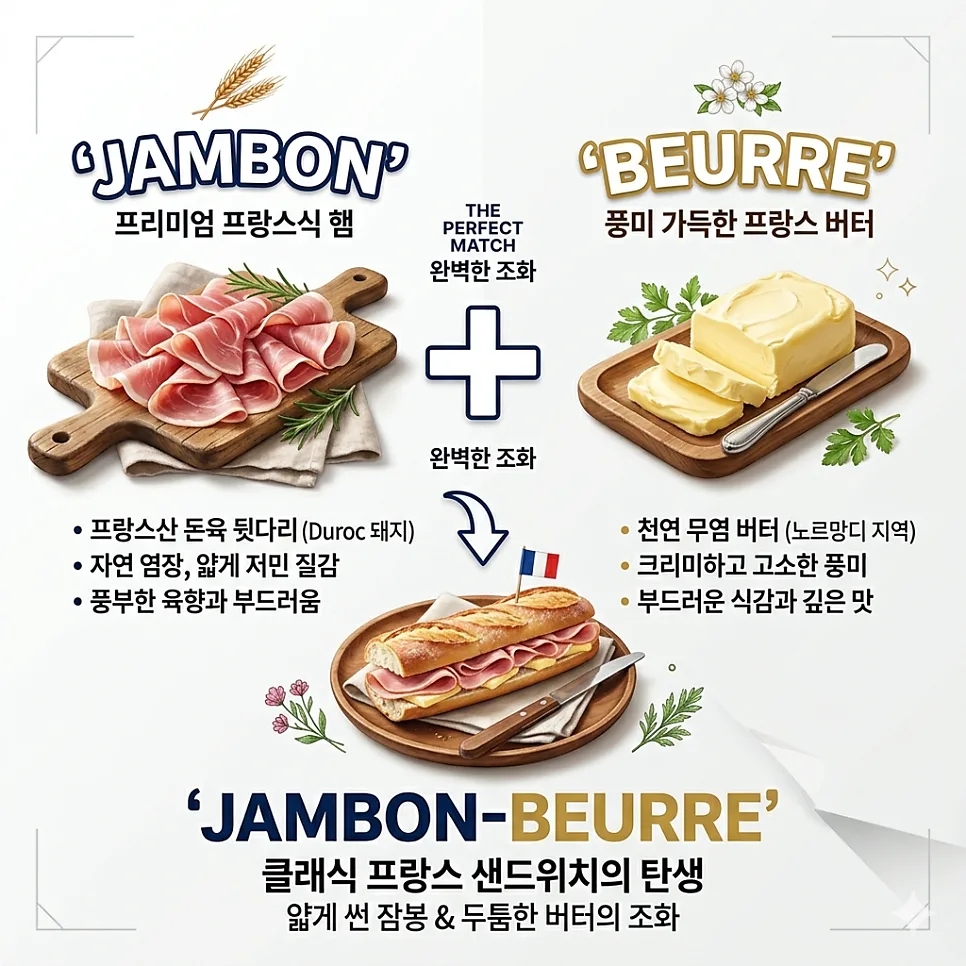
The name 'Jambon-Beurre' directly translates from French, with 'Jambon' meaning ham and 'Beurre' meaning butter. Essentially, it's a ham and butter sandwich. This is similar to how some Korean dishes are named after their core ingredients, like 'cheese kimbap' or 'egg ramyeon.' In France, it's so ubiquitous that it's also known as 'Le Parisien,' a testament to its status as a beloved, everyday sandwich in Paris. Understanding this simple origin makes the sandwich feel even more approachable and familiar. Its charm lies in its ability to deliver a profound flavor profile using just a few high-quality components.
The Essential Ingredients of Jambon-Beurre: Simplicity is Key
Related Articles
Unlike complex sandwiches loaded with sauces and vegetables, Jambon-Beurre focuses on the harmonious interplay of just three core ingredients: baguette, butter, and ham. A freshly baked baguette is sliced, generously spread with fresh butter (salted or unsalted), and then layered with thinly sliced Jambon ham. This minimalist approach allows the natural flavors of each component to shine. The rich, creamy butter complements the savory, slightly salty ham, all encased in the chewy, crusty baguette. It's a testament to how simple, high-quality ingredients can create a deeply satisfying culinary experience.
The quality and freshness of these components are paramount to achieving the sandwich's signature taste.
The Art of Simplicity: Why Ingredient Quality Matters for Jambon-Beurre
Because Jambon-Beurre relies on so few ingredients, their quality is the ultimate determinant of the sandwich's success. A perfect baguette should be crisp on the outside, offering a slight resistance to the bite, while remaining soft and chewy on the inside. The ham should be flavorful without being overly salty, carrying a subtle, savory meatiness. However, the butter is arguably the star. Using high-quality, European-style butter, particularly French butter known for its rich flavor and creamy texture, can elevate the sandwich significantly. This is why artisanal bakeries and cafes often emphasize the 'authentic' nature of their Jambon-Beurre; the harmony achieved through superior ingredients speaks volumes. When choosing a Jambon-Beurre, pay attention to the baguette's texture, the ham's aroma, and the butter's freshness to ensure the best experience.
Jambon-Beurre vs. Croissant Sandwich: Understanding the Difference
It's common to see ham and cheese sandwiches served in croissants at cafes, and sometimes these are mistakenly referred to as Jambon-Beurre. However, the key differentiator lies in the bread. Jambon-Beurre strictly uses a baguette – known for its firm crust and chewy interior. In contrast, a croissant sandwich utilizes a croissant, which is flaky, buttery, and much softer. While Jambon-Beurre celebrates the robust flavors of ham and butter with the satisfying chew of a baguette, a croissant sandwich offers a lighter, richer, and more delicate experience due to the croissant's pastry base. If you enjoy a good bite and the rustic charm of a crusty bread, Jambon-Beurre is your choice. For a softer, melt-in-your-mouth texture with a buttery richness, a croissant sandwich might be preferred.
Considering your preference for bread texture and flavor profile will help you choose the sandwich that best suits your palate.
Why is Jambon-Beurre So Popular in Korea?
The popularity of Jambon-Beurre has surged in Korea over the past few years, becoming a staple in many cafes. Several factors contribute to its appeal for Korean consumers. Firstly, the irresistible combination of 'savory and salty' resonates strongly. Much like the recent trend of 'salt bread' (소금빵), the rich, fatty flavor of butter paired with a hint of salt is highly appealing. Secondly, its sophisticated visual appeal plays a significant role. The contrast between the golden butter and the pinkish ham peeking through the baguette makes it highly photogenic, perfect for sharing on social media. It offers a touch of Parisian chic, allowing diners to feel like they're enjoying a moment at a European sidewalk cafe, even amidst a busy day. This blend of comforting flavors, elegant presentation, and a hint of exoticism explains Jambon-Beurre's widespread success in the Korean market.
For more details, check the original source below.