The food industry in 2026 is set to focus on sustainable growth, driven by key trends in food safety, ESG (Environmental, Social, and Governance) initiatives, and AI technology. Major topics include enhancing HACCP standards, the latest GFSI certification updates, ESG supply chain management, AI-powered foreign substance detection, and innovations in food tech. These areas are becoming critical for businesses aiming for long-term success and consumer trust.
What are the key trends shaping the future of the food industry in 2026?
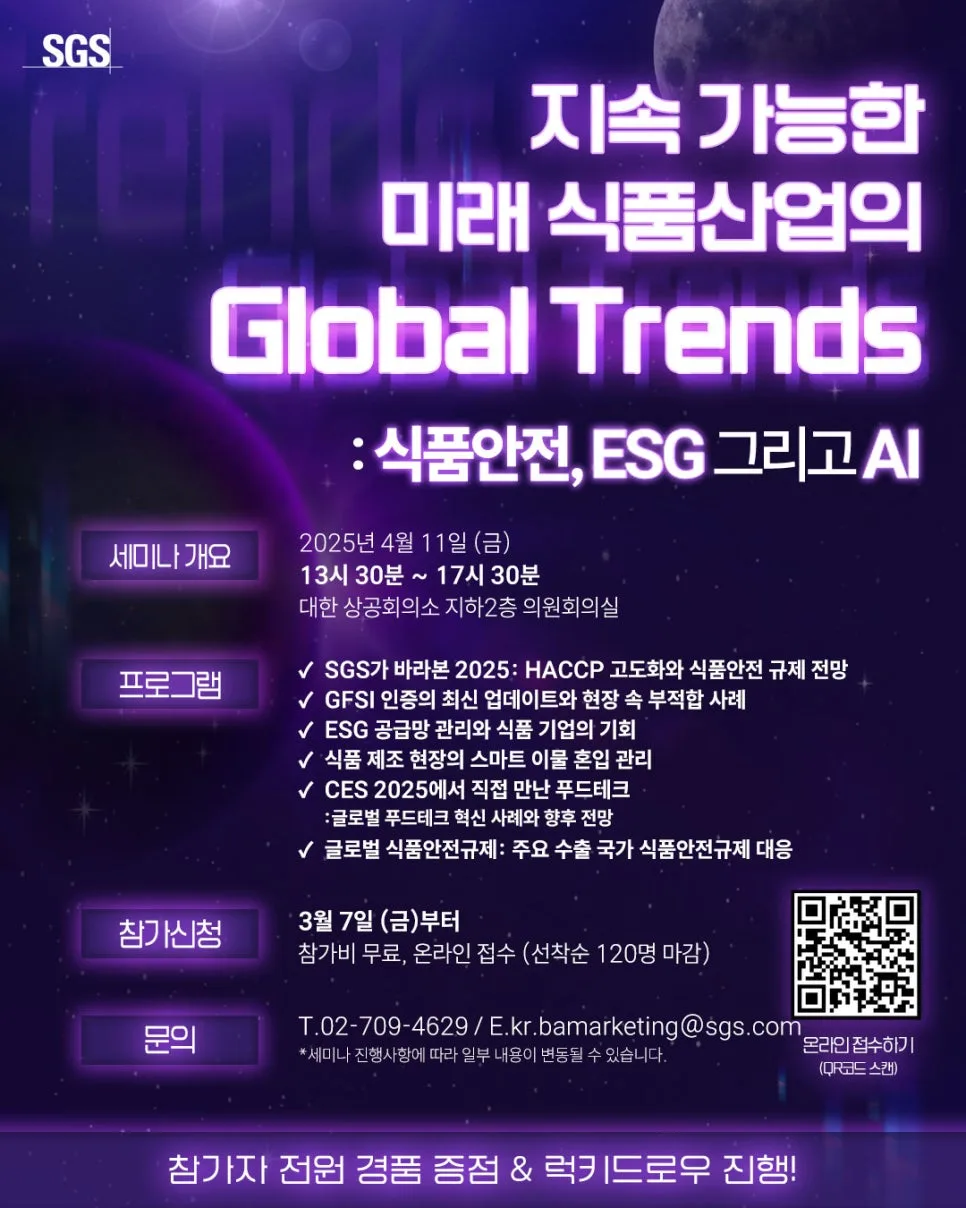
Drawing on expertise in food safety and quality since 2015, SGS hosted a seminar on April 11, 2025, titled 'Global Trends for a Sustainable Future Food Industry – Food Safety, ESG, and AI.' The event delved into crucial areas like the evolution of HACCP and food safety regulations, the latest GFSI certification requirements, and real-world non-compliance cases. Experts also discussed ESG supply chain strategies, smart foreign substance detection methods in manufacturing, and global food tech innovations showcased at CES 2025. Insights into regulatory responses in major export markets were also shared, providing valuable perspectives for industry professionals. The sessions, grounded in practical experience, were highly praised by attendees for their actionable advice.
How are food safety regulations and certifications evolving?
Food safety regulations are continuously tightening globally. For food companies, staying updated on HACCP (Hazard Analysis and Critical Control Points) advancements and the latest GFSI (Global Food Safety Initiative) certification requirements is paramount. Yang Jung-bae, Vice President at SGS, outlined the future direction of food safety regulations for 2025, focusing on HACCP's development. Yoo Jae-joong, a lead auditor, shared the newest GFSI trends and common non-compliance issues encountered in the field. Analyzing these cases helps companies minimize potential pitfalls and streamline their certification processes. Yoon Ah-ri, Senior Manager at Samyang Foods, contributed valuable insights from her experience navigating food safety regulations in key export countries, offering practical guidance for global market entry.
What impact are ESG management and AI technology having on the food industry?
ESG management is no longer optional; it's a necessity for modern businesses. Lee Ju-hyun, a legal expert at Law Firm V&S, highlighted the importance of ESG supply chain management and the opportunities it presents for food companies. Ensuring sustainability across the entire supply chain not only fulfills corporate social responsibility but also unlocks new business avenues. Meanwhile, Lim Jae-wan, CEO of techNeedle, showcased food tech innovations from CES 2025, illustrating how AI is being integrated into every stage of the food lifecycle – from manufacturing and distribution to consumption. AI-driven technologies, such as smart foreign substance detection systems, are expected to significantly enhance food safety and boost production efficiency.
What practical preparations are needed for the future of the food industry?
To navigate the evolving landscape of the food industry, it's crucial to understand the latest global trends and apply them effectively in practice. Attendees gained valuable insights from the seminar regarding current certification standards and real-world applications, enabling them to strategize for their own businesses. The integration of AI in areas like smart foreign substance detection systems is particularly noteworthy, promising to elevate both safety and operational efficiency in food manufacturing. Embracing these advancements is key for companies aiming to maintain competitiveness and meet consumer expectations for safe, sustainable, and technologically advanced food products.
For more details, check the original source below.