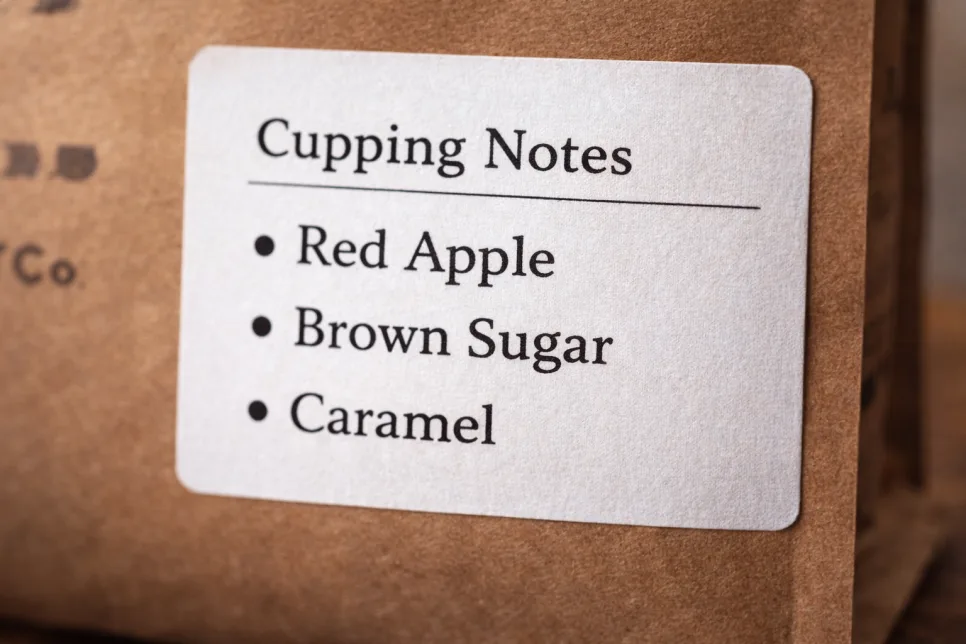
Many coffee lovers miss the nuanced chocolate notes described in 'cupping notes' on coffee bags because the flavor isn't literal chocolate. To truly taste these notes, it's crucial to let the coffee cool slightly, swirl it on your tongue, and exhale through your nose. Understanding the three-step interpretation of aroma, acidity, and aftertaste unlocks a richer coffee experience.
What Exactly Are Coffee Cupping Notes?
You've likely seen descriptions like 'jasmine aroma, berry acidity, milk chocolate sweetness' on your coffee bag and wondered why your brew doesn't taste exactly like that. The key is understanding that coffee beans are seeds from coffee cherries, and the flavors described in cupping notes are developed during the roasting process, not from added ingredients. These notes are a shared language among baristas, indicating flavor *nuances* that resemble familiar tastes like chocolate or fruit, rather than containing them literally. Think of 'chocolate' as a descriptor for a rich, slightly bitter, or deep flavor profile reminiscent of cocoa, not a candy bar. This descriptive language helps us explore the complex world of specialty coffee.
How to Properly Taste Coffee Flavors

The most common reasons for missing subtle coffee flavors, like those chocolate notes, are temperature and a lack of imaginative association. Coffee that's too hot can overwhelm your taste buds, masking the delicate acidity and sweetness. Allowing your coffee to cool to a lukewarm temperature is essential for the flavors to fully emerge. Furthermore, instead of trying to pinpoint a specific brand of chocolate, try to associate the 'chocolate' note with the general sensation of dark chocolate – its richness, slight bitterness, or deep cocoa undertones. This imaginative leap is crucial for appreciating the complexity described in cupping notes. Engaging your palate by swirling the coffee and focusing on the aromas released as you exhale through your nose will further enhance your tasting experience.
A 3-Step Guide to Interpreting Cupping Notes
To effectively decode coffee cupping notes, follow this three-step approach. First, focus on the 'Aroma' notes, which describe the scent of the coffee – think floral notes like 'jasmine' or 'rose.' Second, analyze the 'Acidity,' which refers to the bright, tangy sensation. Terms like 'lemon' suggest a sharp, vibrant acidity, while 'orange' implies a softer, sweeter citrus note, and 'berry' indicates a fruity tartness. Finally, consider the 'Aftertaste,' the lingering sensation after you swallow. Notes like 'nutty,' 'chocolate,' or 'caramel' suggest a pleasant, often sweet or rich finish. By systematically evaluating these three components, you can gain a much deeper appreciation for the coffee's intricate flavor profile.
Training Your Palate for Coffee Flavor Discovery
As a former cafe manager, I often trained new baristas using a simple yet effective technique. I'd have them take a sip of coffee, gently swirl it around their entire tongue, and then exhale slowly through their nose. This process allows the aromatic compounds to travel to the olfactory receptors in the nasal cavity, making the described flavors, like 'chocolate,' much more apparent. It's similar to how your grandmother might recall smelling 'roasted sweet potato' – it’s a personal sensory memory triggered by the coffee's aroma. Remember, cupping notes are not absolute truths but rather helpful guides to help you discover and enjoy the vast spectrum of coffee flavors. This practice encourages you to develop your own unique coffee vocabulary and appreciation.
For more details, check the original source below.