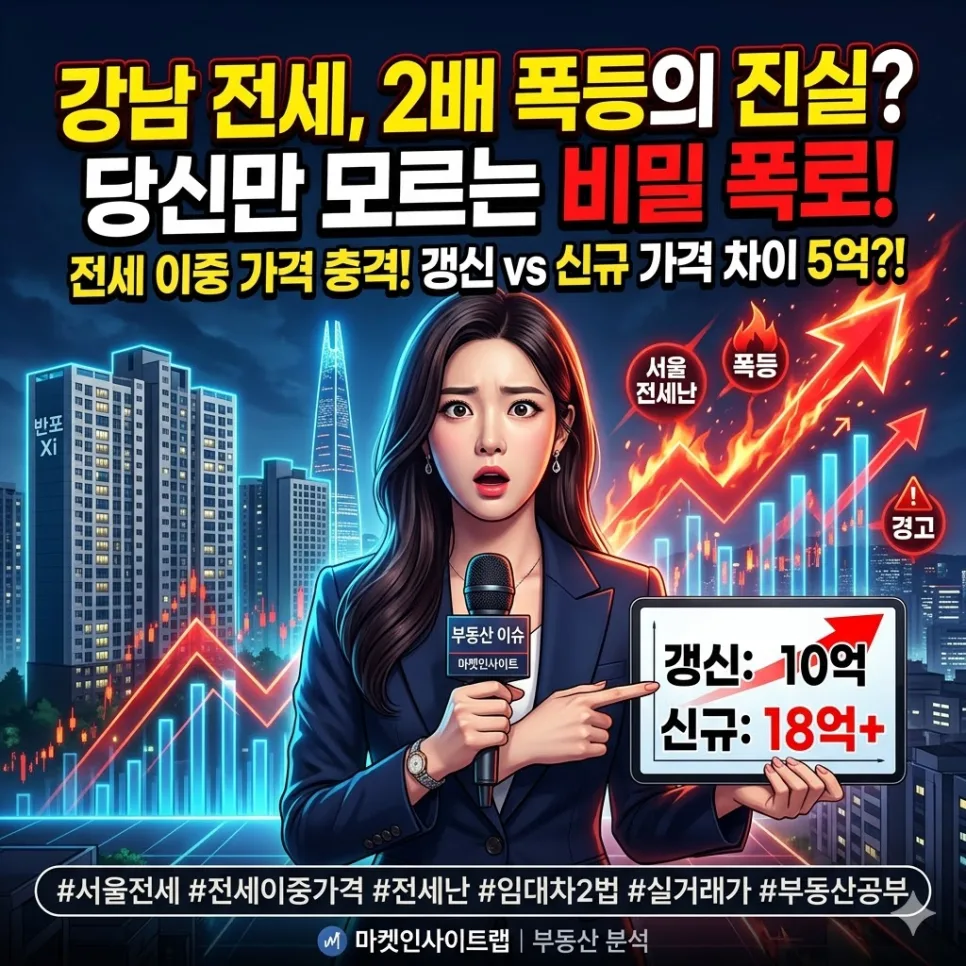
Seoul's rental market is experiencing a widening 'dual price' phenomenon, where identical apartments in the same complex can have rental deposit (jeonse) prices differing by up to $11 million USD (₩1.5 billion KRW). This disparity, driven by recent rental laws, is causing significant confusion and financial strain for tenants. Understanding the nuances between new and renewed contracts is crucial for navigating this complex market in 2026.
Why Do Identical Apartments in Seoul Have Such Different Jeonse Prices?
The stark price difference for identical apartments in Seoul's jeonse market stems from the implementation of South Korea's 'Rental Business Act' (임대차 2법). This legislation introduced two key changes: a cap on rent increases for contract renewals and the right for tenants to request one contract renewal. Consequently, when a tenant renews their lease using the contract renewal request right, the rent increase is legally capped at 5%. However, for new tenants moving into a vacant unit, the landlord can set the jeonse price according to the current market rate, which has surged significantly. Shinhan Premier Pathfinder analysis indicates that the average gap between new and renewed jeonse contracts in Seoul apartments is around $53,000 USD (₩70 million KRW). In some high-demand areas like Gangnam, this difference can exceed $1.1 million USD (₩1.5 billion KRW) for the same unit. For instance, a 85 sqm unit in Banpo Xi, a luxury complex, was reportedly renewed at $780,000 USD (₩1.05 billion KRW) while a new lease for an identical unit was listed at $1.9 million USD (₩2.5 billion KRW). This price separation is expected to intensify as more tenants exhaust their renewal rights.
Why Is It Crucial to Differentiate Between New and Renewed Jeonse Contracts?
Distinguishing between new and renewed jeonse contracts is vital for tenants to accurately assess their actual financial obligations. Simply looking at the lowest recent transaction prices within the same complex can be misleading, as these often reflect renewed contracts with capped rent increases. Tenants actively searching for a new home must budget based on the current market rates reflected in new contracts. When reviewing official transaction data from the Ministry of Land, Infrastructure and Transport, it's important to remember that lower prices may indicate a renewed lease, not the current market value. Failing to grasp this distinction can lead to significant financial planning errors. While a renewed contract might offer immediate relief, exhausting the contract renewal rights means future moves will necessitate paying the full market price, potentially requiring a substantial increase in funds. Some analyses suggest that tenants needing to sign new contracts might face the need to secure an additional 15% to 50% of their previous deposit.
What Are the Impacts of Seoul's Dual Jeonse Price Phenomenon on Tenants and Landlords?
The dual jeonse price system creates confusion and challenges for both tenants and landlords. For tenants, the initial expectation of lower prices based on renewal rates can lead to disappointment and difficulty when they encounter the higher market rates for new leases. Those who have used up their renewal rights face the daunting task of securing significantly higher deposits in a competitive market with fewer available units. Landlords, on the other hand, face limitations in adjusting rents for existing tenants due to the 5% cap, while simultaneously seeking market rates for new tenants. This creates an uneven playing field within the same building. Over time, this disparity is likely to widen. The rising jeonse prices are also accelerating the shift from jeonse to monthly rentals (wolse). While this provides landlords with more stable monthly income, it increases the burden of fixed monthly expenses for tenants. Conversely, landlords might face increased vacancy risks due to a shrinking pool of jeonse renters.
What Precautions Should Tenants Take in This Era of Dual Jeonse Prices?
In light of the intensifying dual jeonse price trend in Seoul, tenants should be aware of several key precautions. Firstly, always verify the contract type when viewing rental properties. Don't be swayed by lower transaction prices; confirm whether the listing is for a new lease or a contract renewal. Secondly, base your financial planning on current market rates for new contracts, as these represent the actual cost of moving into a new property. The price of a renewed contract does not reflect your future financial needs. Thirdly, understand the status of your contract renewal rights: how many times you've used them and how many remain. If you've used all your renewal options, be prepared to pay the full market price for your next move. Lastly, remain vigilant against potential rental scams. The volatile market conditions can be exploited by fraudsters. Always perform due diligence, such as verifying the property's title deed and ensuring proper registration, tenant residency, and a confirmed lease date. Consulting with a real estate professional is recommended if you have specific concerns about your contract terms.
For more details, check the original source below.





