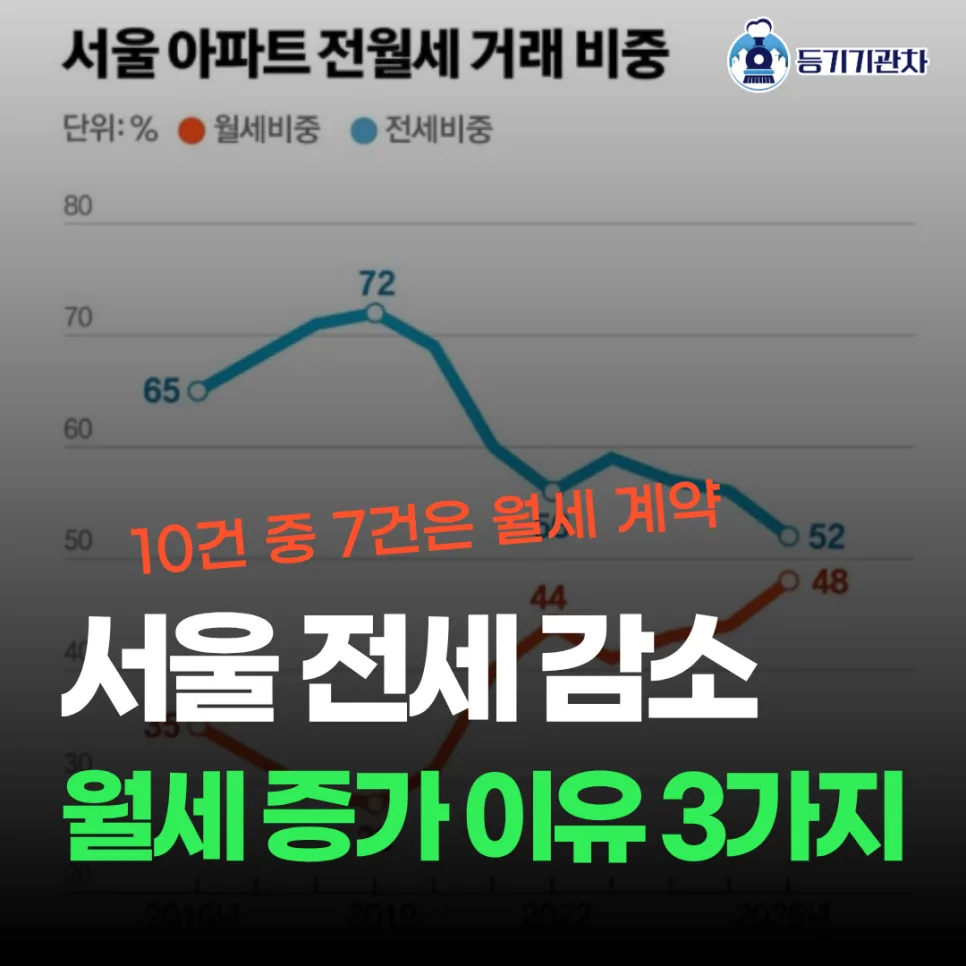
Seoul's apartment rental market is rapidly shifting from 'Jeonse' (lump-sum security deposit) to monthly rent, with rent transactions now exceeding 70% of the market. In 2026, this transition to monthly rent is an undeniable trend, fundamentally changing how Koreans secure housing.
Why Are Seoul Apartment 'Jeonse' Listings Plummeting?
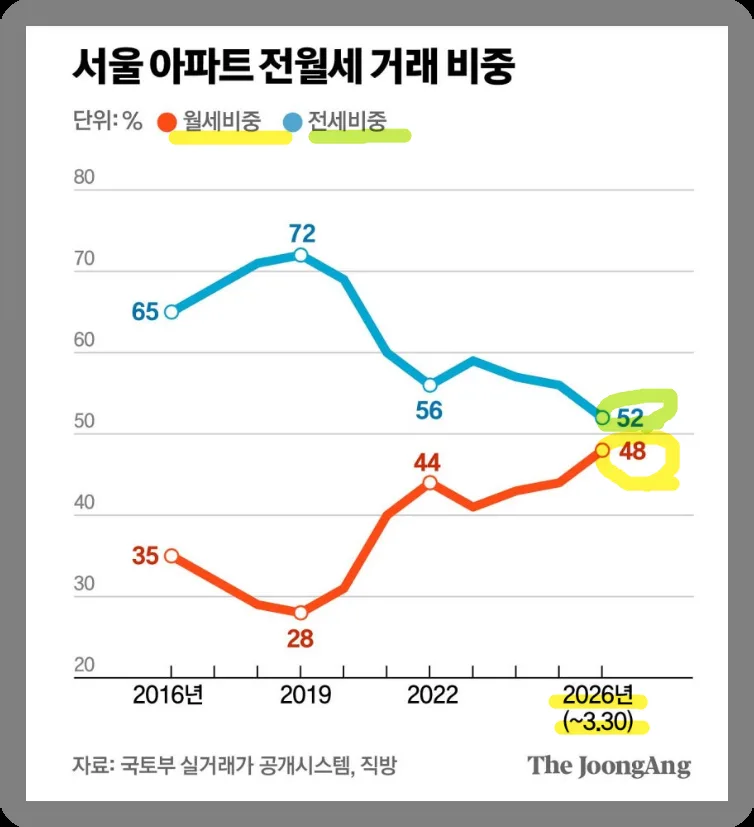
Finding a 'Jeonse' apartment in Seoul has become incredibly difficult. Data from the Ministry of Land, Infrastructure and Transport and on-the-ground reports show that in January-February 2026, monthly rent transactions accounted for 70.3% of Seoul's rental market, a record high. Just five years ago, apartments with 'Jeonse' made up over 70% of the market, but this has now fallen to 52%, with monthly rent rising to 48%, nearly a 50/50 split. In areas popular with middle-to-low income residents like Seongbuk-gu, Nowon-gu, and Gwanak-gu, 'Jeonse' listings have virtually disappeared, with an 80-90% drop in the past year. This scarcity is driving up 'Jeonse' prices, which in turn fuels further increases in monthly rent, creating a difficult cycle for renters.
What Are the Main Reasons for the Shift to Monthly Rent?
The rapid shift in Seoul's rental market towards monthly rent is driven by a combination of government policies and economic factors. Firstly, government policies mandating owner occupancy and expanding designated development zones have made speculative 'Jeonse' investments (known as 'gap investment') nearly impossible, drastically reducing new 'Jeonse' supply. Secondly, homeowners facing increased property taxes are increasingly preferring monthly rent to secure immediate cash flow over large lump-sum 'Jeonse' deposits. Thirdly, high interest rates have made 'Jeonse' loan interest more burdensome for tenants, making paying monthly rent a more economically viable option. Furthermore, frequent 'Jeonse' scams have heightened anxiety around entrusting large security deposits, accelerating the move towards monthly rentals.
What Difficulties Do Renters Face with the Rise of Monthly Rent?
The surge in monthly rent directly impacts renters' finances. Consistent monthly rent payments increase household housing expenses, slowing down wealth accumulation and diminishing opportunities for future homeownership. This is particularly challenging in areas with a high concentration of lower-priced apartments where 'Jeonse' options have vanished. The fear of not recovering 'Jeonse' deposits, coupled with rising interest rates on 'Jeonse' loans, places significant psychological and financial pressure on renters.
What Should Renters Be Aware of in the Era of Rising Monthly Rents?
In the current environment of increasing monthly rents, renters should be mindful of several key points. First, when signing a monthly rent contract, meticulously check the property's title deed for any liens or encumbrances to minimize the risk of deposit loss, similar to 'Jeonse' scam prevention. Second, carefully compare 'Jeonse' loan interest rates with monthly rent conversion rates to determine the most financially advantageous option for your situation. Third, while planning for long-term homeownership is advisable, approach current housing market conditions with caution. Since the optimal housing strategy varies by individual circumstances, consulting with a real estate professional is recommended.
For more details, check the original source below.





