The end of a 4-year tax break for multi-homeowners has caused a significant drop of over 2,800 Seoul apartment listings, signaling major market shifts. This 'listing freeze' is driven by the prospect of capital gains tax rates soaring up to 82.5%, making sellers hesitant to offload properties. This analysis explores the market outlook for 2026 and the ripple effects on the rental market.
What's the Impact of Ending the Multi-Homeowner Tax Break?
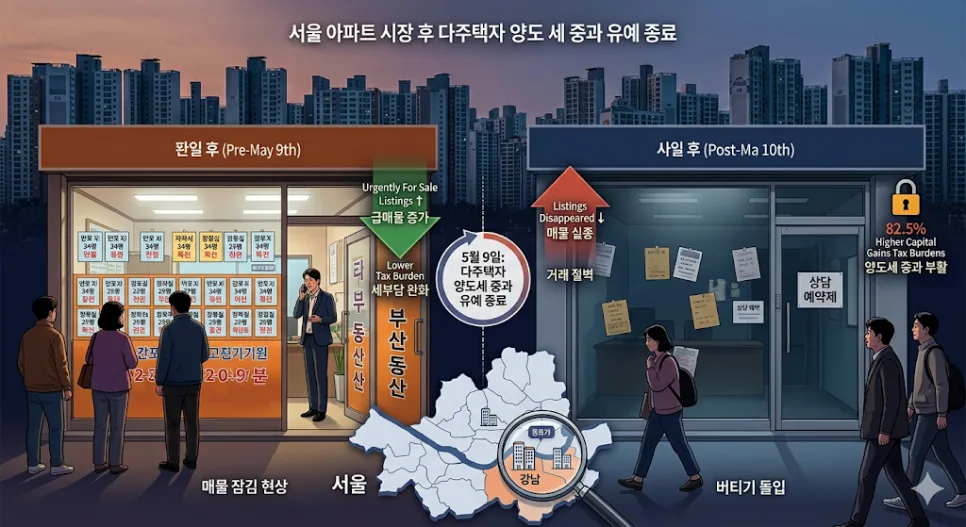
The temporary suspension of increased capital gains taxes for multi-homeowners, which ended on May 9, 2024, has reintroduced steep tax burdens for those owning multiple properties in designated 'adjustment target areas.' Previously, sellers could benefit from reduced tax rates, but now they face a base rate plus a significant surtax, pushing the maximum capital gains tax to a staggering 82.5%. This drastic change has directly impacted the market, with many homeowners who were considering selling now withdrawing their listings due to the prohibitive tax implications. Historically, such sharp tax policy shifts tend to significantly curb immediate property supply.
Why Are Seoul Apartments Disappearing from the Market?
The reintroduction of hefty capital gains taxes has triggered a 'listing freeze,' causing a dramatic decline in available Seoul apartments. In just 70 days, the total number of apartment listings in Seoul fell below 70,000. Homeowners are realizing that selling now would incur substantial tax liabilities, leading them to postpone or cancel their plans to sell. This shift in seller sentiment has caused market liquidity to dry up rapidly, impacting not just the number of available homes but also the overall transaction sentiment. It's a clear signal that sellers are adopting a wait-and-see approach rather than rushing to sell under unfavorable tax conditions.
Despite Fewer Listings, Why Aren't Seoul Home Prices Dropping?
Even with a significant drop in transaction volume, Seoul apartment prices have shown resilience, with some areas like Gangnam even recording new record highs. This counterintuitive trend is driven by several factors. Firstly, concerns over future supply shortages, stemming from reduced new construction and fewer move-ins, are creating upward price pressure. Secondly, a portion of potential buyers, deterred by high selling taxes, are shifting to the rental market, driving up rental prices. This, in turn, provides a floor for property values as rental yields become more attractive. Thirdly, the persistent preference for owning a single, high-quality property ('똘똘한 한 채') in prime locations continues to support demand among serious buyers. Experts suggest that these supply-demand imbalances are unlikely to be resolved solely by tax policy changes.
What's the Outlook for the Real Estate and Rental Market?
A primary concern is the potential spillover effect from the stalled sales market into the rental sector, leading to increased instability. With many homeowners opting out of selling, they may convert their properties to rental units (both long-term leases and monthly rentals), potentially driving up rental costs significantly. Furthermore, ongoing discussions about government revisions to property ownership taxes and potential interest rate fluctuations in the latter half of the year add layers of complexity to the market outlook. For individuals, it's crucial to thoroughly assess personal financial situations and housing needs, focusing on long-term perspectives rather than short-term market fluctuations. In this uncertain environment, financial advisors recommend avoiding excessive borrowing and instead carefully evaluating distressed sale opportunities or closely monitoring rental market dynamics to time future moves strategically.
For more details, check the original source below.