The Raelian La Grande 'no-reserve' housing lottery in Seoul offers a chance at a significant profit, potentially up to $450,000 USD, but requires strict eligibility and rapid fund preparation. Key conditions include being a Seoul resident and a non-homeowner, with a tight one-month deadline to secure 80% of the payment. While using a tenant's deposit (jeonse) is theoretically possible, market volatility makes it a risky strategy. Winners also face a 10-year re-application ban and resale restrictions.
Why is the Raelian La Grande Housing Lottery Called a 'Lottery Jjup-jjup'?
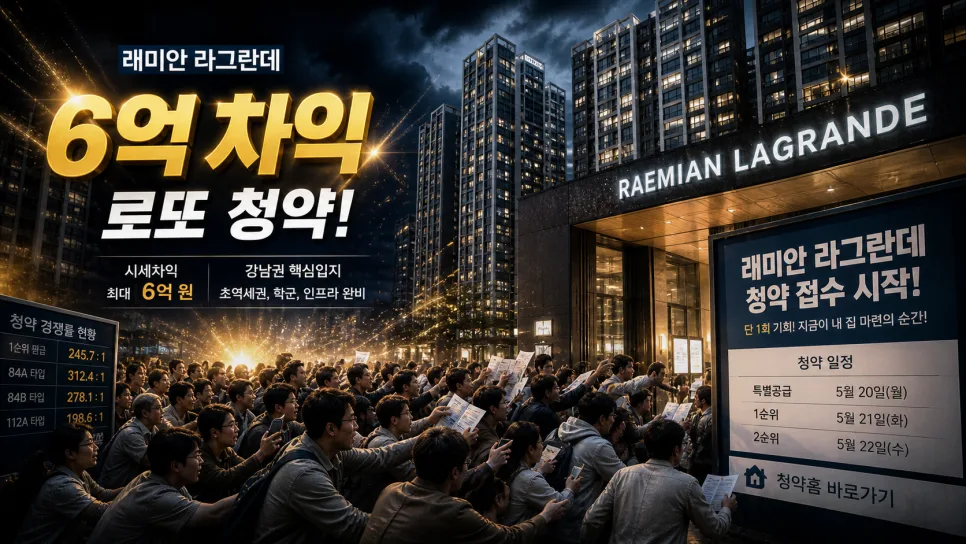
A rare opportunity has emerged in Seoul's Dongdaemun-gu district with just two 'no-reserve' (무순위 청약, mujunwi cheongyak) units available at Raelian La Grande. These units, a 55㎡ and a 74㎡C, are being offered at their 2023 prices, approximately $630,000 USD for the 55㎡ and $700,000 USD for the 74㎡. However, current market prices for similar apartments in the area range from $900,000 to $1.2 million USD. This significant price difference translates to a potential profit of around $270,000 USD for the 55㎡ unit and up to $450,000 USD for the 74㎡ unit. This substantial 'paper profit' has earned the lottery the nickname 'Lottery Jjup-jjup' (로또 줍줍), referring to a lucky, unexpected find. These units became available due to contract cancellations, making this a unique chance for prospective buyers.
What Are the Strict Eligibility Requirements for This Housing Lottery?
Despite the 'no-reserve' status, which might suggest easy entry, the Raelian La Grande lottery has stringent requirements. The primary hurdle is being a 'Seoul resident and a non-homeowner' (서울 거주 무주택자). While it doesn't require a traditional housing subscription account (청약 통장), this specific residency and ownership status significantly narrows down the applicant pool. Many may apply, but only those meeting these criteria can truly compete. Furthermore, successful applicants face a demanding payment schedule: a 20% down payment upon signing, followed by the remaining 80% within just one month. Failure to secure these funds promptly means forfeiting the contract and the opportunity, highlighting the need for meticulous financial planning before applying.
Is Using a Tenant's Deposit (Jeonse) a Realistic Option for Meeting the Payment Deadline?
Many potential buyers consider leveraging a tenant's deposit (전세, jeonse) to cover the substantial 80% balance required within a month. Since there's no mandatory residency requirement after purchase, renting out the unit is theoretically possible. However, this strategy carries significant risks. The current South Korean rental market is volatile, and securing a tenant at a price high enough to cover the remaining payment isn't guaranteed. The actual deposit amount received could be lower than anticipated, especially given the current economic climate and the specific timing of the payment deadline. Relying solely on this method without a solid backup financial plan could lead to a situation where a winner cannot complete the purchase, underscoring the need for careful market analysis and contingency planning.
What Penalties Apply If You Win the Raelian La Grande Lottery?
Winning this highly sought-after lottery comes with significant long-term implications. A major consequence is a 10-year ban on re-applying for housing in Speculative热区 (투기과열지구) and Regulated Areas (조정대상지역). This means future housing applications in these desirable zones will be restricted for a decade. Additionally, there are resale restrictions (전매 제한), preventing immediate sale of the property for profit. This is not a quick flip opportunity; it's a long-term investment. Understanding these restrictions is crucial, as winning could impact your ability to purchase other properties or capitalize on market fluctuations for a considerable period. It's essential to weigh the potential profit against these significant limitations before applying.
For more details, check the original source below.