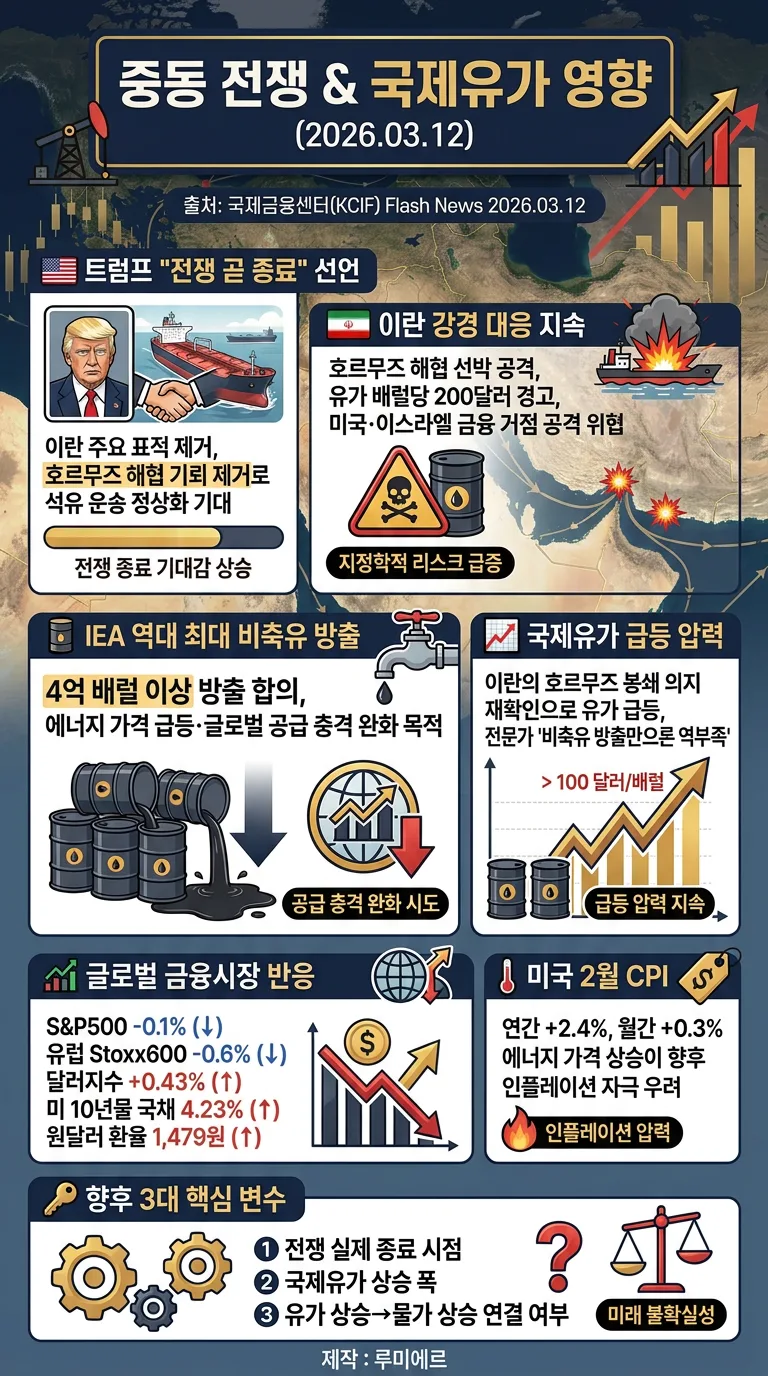
The Middle East war's trajectory in 2026 remains uncertain, with former President Trump's comments on potential early termination and the International Energy Agency's (IEA) strategic reserve release aiming to stabilize global oil prices. This analysis focuses on the impact of these developments on international oil prices, US inflation, and financial markets, providing a concise outlook for 2026.
Could Trump's 'War Ending Soon' Remarks Actually End the Conflict?
Former US President Donald Trump has suggested the current Middle East conflict could end soon, citing the elimination of key targets and the clearing of mines in the Strait of Hormuz as reasons. He has claimed these actions would normalize oil transport and stabilize global oil prices. Indeed, following Trump's remarks, there were reports of oil prices dropping and stock markets rising. However, the reality of the conflict remains highly uncertain. Iran's firm stance and complex international dynamics mean that Trump's pronouncements may not directly lead to a resolution. Geopolitical risks are notoriously unpredictable, and situations can change rapidly, suggesting caution is warranted.
Iran's Continued Resistance and the $200/Barrel Oil Price Threat
Contrasting with optimistic predictions, Iran continues to signal a strong commitment to resistance. The Iranian Revolutionary Guard Corps has reported attacking vessels in the Strait of Hormuz that ignored warnings, fueling concerns that oil prices could surge to as high as $200 per barrel. Iran has also alluded to potential attacks on the economic and financial systems of the US and Israel, suggesting a prolonged conflict. Reports indicate Iran has rejected US-proposed ceasefire terms multiple times, underscoring their determination to escalate. This aggressive posture directly pressures international oil prices and amplifies worries about global energy supply chains. Iran's future actions and the international community's response will be critical determinants of oil price volatility.
IEA's Strategic Reserve Release: A Temporary Fix for Oil Prices?
In response to escalating tensions and fears of energy supply disruptions, the International Energy Agency (IEA) has authorized the release of strategic petroleum reserves. Member nations have agreed to release over 400 million barrels, marking one of the largest coordinated releases in history. The primary goal is to temper soaring energy costs and mitigate the impact on the global economy. Following the IEA's announcement, the upward trend in oil prices showed some moderation. However, analysts caution that this measure might not be sufficient to offset potential supply disruptions, especially if geopolitical risks in the Middle East persist. The possibility of Iran disrupting the Strait of Hormuz, for instance, could continue to exert upward pressure on prices, making the long-term oil price outlook uncertain despite the reserve release.
US Inflation and Financial Market Reactions to the Middle East War
The latest US Consumer Price Index (CPI) data for February showed a 2.4% annual increase and a 0.3% monthly rise, indicating that inflation has not accelerated as sharply as some had feared. Nevertheless, concerns linger about the potential for rising oil prices stemming from the Middle East conflict to further fuel inflation. Higher oil prices translate to increased transportation and energy costs, potentially driving up overall prices. Global financial markets are reacting sensitively. The S&P 500 index experienced a slight decline, influenced by the prospect of rising oil prices and interest rates. European markets also showed weakness due to energy supply concerns. The US dollar has strengthened, and the 10-year Treasury yield has climbed. Looking ahead to 2026, the duration of the Middle East conflict and oil price fluctuations will likely continue to influence US inflation and monetary policy.
Key Factors to Watch: Conflict Resolution, Oil Prices, and Inflation Transmission
The most critical variables for the global economy moving forward are the unfolding of the Middle East conflict, the subsequent volatility in international oil prices, and whether these price increases will translate into broader inflation. Balancing former President Trump's remarks on early termination against Iran's persistent resistance is crucial. The effectiveness of the IEA's reserve release in curbing oil price surges will also be a key indicator. Ultimately, the extent to which these oil price pressures impact inflation in major economies like the US and influence their monetary policies will likely shape the future trajectory of global financial markets. Therefore, close monitoring of these three factors is essential for navigating market changes. Individual investment decisions should be made cautiously, considering these macroeconomic variables alongside personal financial circumstances and in consultation with a qualified financial advisor.
For more details, check the original source below.





