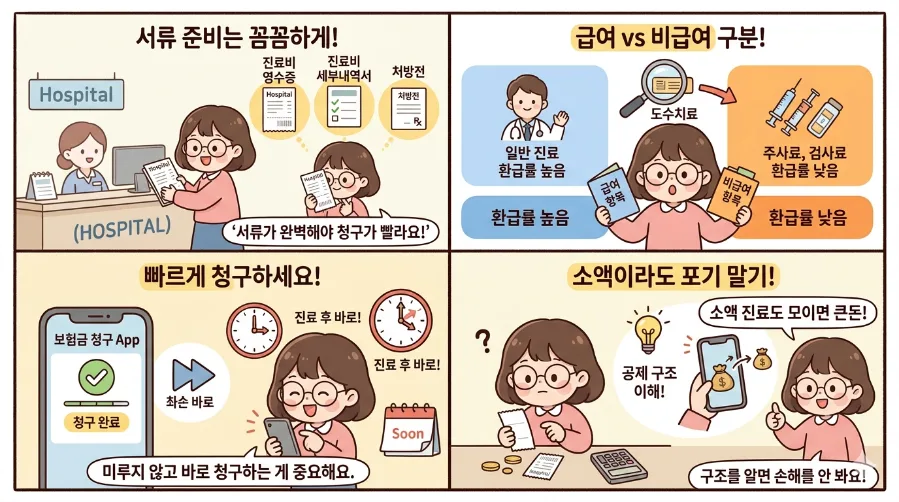
To get the most out of your out-of-pocket medical expense reimbursement (often called '실손보험' or '실비보험' in Korea, similar to supplemental health insurance in the US), focus on four key steps: preparing the right documents, understanding the difference between covered (급여) and non-covered (비급여) services, knowing the best time to file a claim, and grasping the deductible structure. Understanding how your coverage differs based on when you enrolled (your 'generation' of insurance) can also help minimize losses.
What Documents Are Needed for Medical Reimbursement Claims?
The first step to filing a successful reimbursement claim is gathering the correct paperwork. You'll absolutely need your medical receipt (진료비 영수증). Crucially, you'll also need a detailed breakdown of your medical bills (진료비 세부내역서), especially to clarify non-covered services. Depending on your situation, a prescription or a doctor's diagnosis letter (진단서) might also be required. Ensure all documents clearly list every service you received without any omissions. Missing documents can delay your claim or lead to requests for additional information, causing unnecessary hassle. In my experience, having that detailed breakdown is key to understanding exactly what the insurance company will cover.
Why Is Differentiating Between Covered and Non-Covered Services Crucial?
Related Articles
One of the most significant factors determining your reimbursement amount is understanding the difference between covered (급여) and non-covered (비급여) services. Covered services are those eligible under national health insurance, and your supplemental plan typically covers a portion of your out-of-pocket costs for these. Non-covered services, such as certain alternative therapies, cosmetic procedures, or advanced diagnostic tests, often have different coverage rates or higher deductibles. If your medical bills are heavily weighted towards non-covered services, your actual reimbursement will likely be lower. It's essential to know the specific coverage rules for each category to avoid surprises.
When and How Is It Best to File Your Reimbursement Claim?
It's generally advantageous to file your reimbursement claim as soon as possible after receiving medical treatment. Most insurance providers now offer convenient mobile app claim submission, making it easy to file immediately after your appointment. Delaying your claim can increase the risk of losing or misplacing important documents, and the insurance company might request additional verification, prolonging the process. Prompt filing ensures a smoother review and helps prevent accidental omissions. Using a mobile app can often reduce the submission process to just a few minutes.
Can Understanding the Deductible Structure Reduce Your Losses?
Your out-of-pocket insurance doesn't cover 100% of your medical bills; it reimburses you after a certain deductible (자기부담금) is met. For outpatient visits, a fixed deductible amount is often applied per visit, meaning small medical expenses might result in little to no reimbursement. Inpatient care typically has a more favorable deductible structure compared to outpatient services. Furthermore, your policy's deductible and coverage details can vary significantly based on its 'generation' (1st, 2nd, 3rd, or 4th generation plans). These differences affect your co-payment percentages, how covered and non-covered services are handled, and whether non-covered service usage leads to higher deductibles. Familiarizing yourself with your specific plan's generation and its associated rules is vital.
What Are Common Mistakes Made During Reimbursement Claims?
Many people make similar mistakes when filing for medical expense reimbursement, leading to potential losses. A frequent error is not fully understanding the coverage details or co-payment percentages for non-covered services. Others fail to scrutinize their detailed medical bill breakdown, missing out on eligible reimbursements. Some delay filing too long, leading to documentation issues, or simply give up on small claims, thinking it's not worth the effort. However, these small amounts can add up significantly over time. Developing a habit of thoroughly understanding your policy terms and meticulously filing claims is crucial. Remember, coverage varies by enrollment date (generation), so always check your specific policy details.
Learn how to get the most from your medical reimbursements.