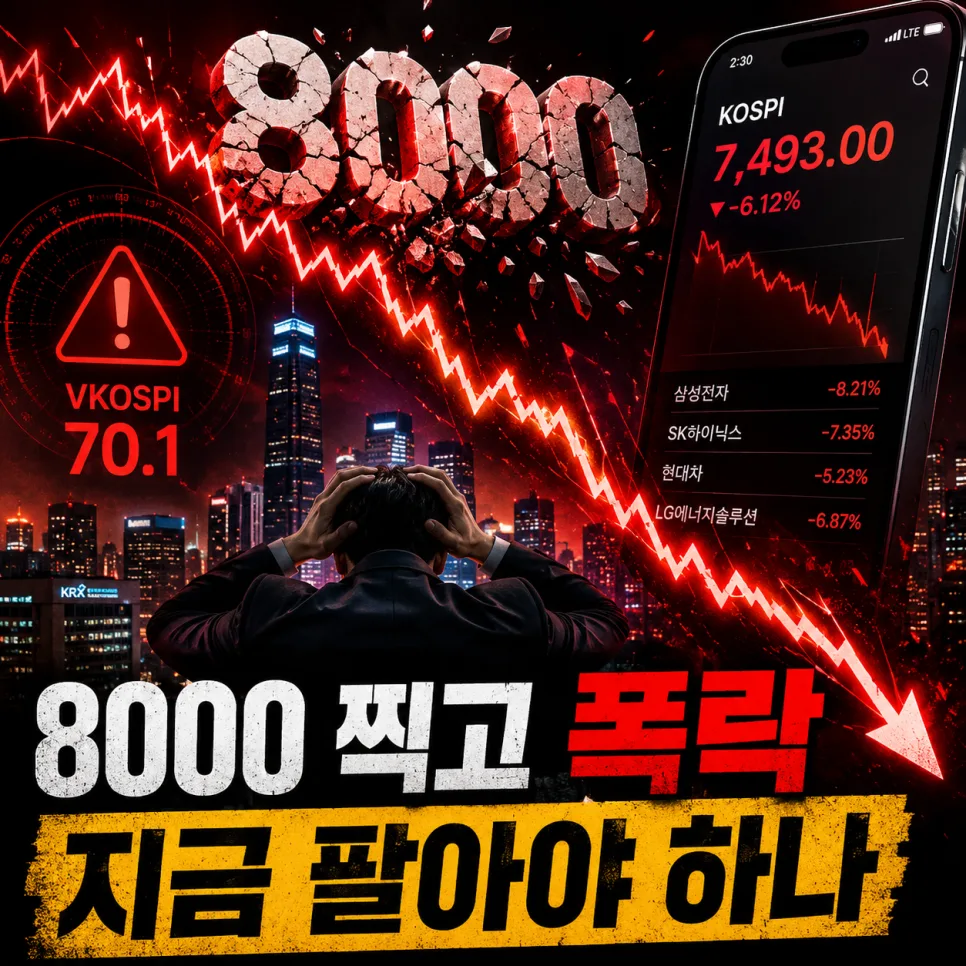
Many investors are feeling the shockwaves after the KOSPI index experienced a sharp 6% plunge, just after touching the 8000 mark. With foreign investors selling over $3.7 billion (₩5 trillion), the market has faced significant turbulence. This article will break down the reasons behind the recent KOSPI crash and offer a strategic investment outlook for 2026 to help you make informed decisions.
Why Did the KOSPI Suddenly Plunge Over 6% in 2026?
On May 15th, the KOSPI index initially broke through the 8000 level, signaling a potential new high. However, the market took a dramatic downturn in the afternoon, closing at 7493, marking a steep 6.12% drop in a single day. The KOSDAQ index also fell by 5.14%, and the USD/KRW exchange rate surged back above 1500, amplifying market anxiety. This sharp decline was driven by a confluence of three key factors. Firstly, concerns over rising US interest rates intensified after inflation data exceeded expectations, pushing the US 10-year Treasury yield above 4.5%—its highest point this year. This made safe-haven assets like bonds more attractive, triggering capital outflows from the stock market. Secondly, Japan's corporate goods price index for April rose 4.9% year-over-year. Coupled with a weakening Yen, this fueled speculation about a potential interest rate hike by the Bank of Japan in June, creating tension across Asian financial markets. Thirdly, a severe supply-demand imbalance occurred as foreign investors continued their selling spree for the seventh consecutive trading day, offloading approximately $3.7 billion (₩5.661 trillion) worth of Korean stocks on this single day. In contrast, individual investors bought a record $5.2 billion (₩7.2298 trillion), attempting to cushion the market's fall. These combined factors significantly increased market volatility and led to the sharp sell-off.
VKOSPI Surges Past 70: What Does This Mean for Investor Fear in 2026?
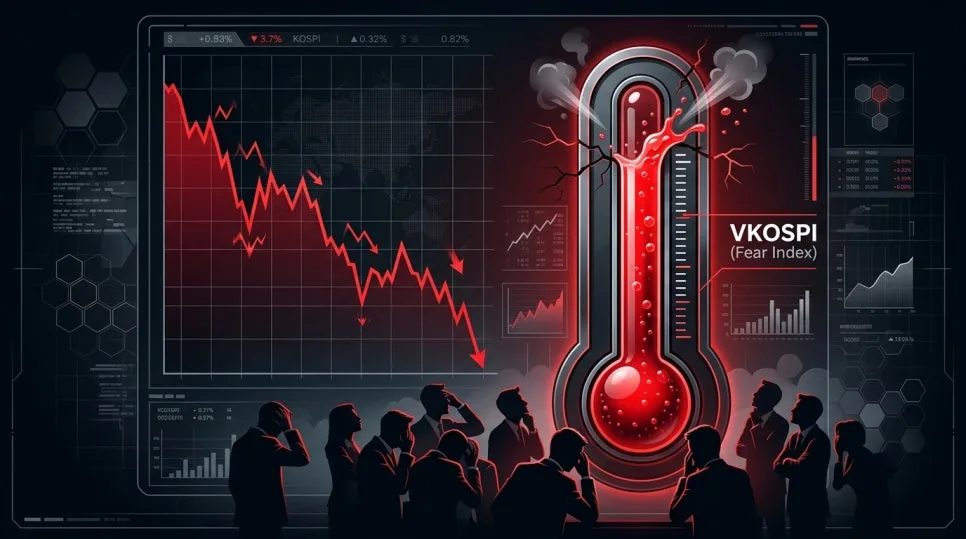
The VKOSPI (Korea Stock Exchange Volatility Index), often called the 'fear gauge' of the stock market, has surged past 70 and remained elevated for four consecutive trading days. A VKOSPI reading above 40 is generally considered a sign of heightened market anxiety, but the current level of 70+ indicates an extreme fear scenario, comparable to the period during the US-Iran conflict earlier in 2024. This elevated volatility reflects intense investor nervousness and suggests a high probability of sharp price swings. Following this trend, major tech stocks like SK Hynix saw declines of over 7% and Samsung Electronics fell by more than 8% after the market close, erasing significant portions of their recent gains. In such an environment, it's crucial for investors to distinguish between stocks falling due to broad market shocks and those facing fundamental issues. Instead of making hasty decisions driven by fear, a cautious approach is needed, involving objective market analysis and a review of personal investment principles.
What's the Biggest Market Driver Next Week, and How Should You Respond?
The most significant market driver for the upcoming week is Nvidia's earnings report, scheduled for release on May 21st (US time). As a bellwether for AI-related stocks, Nvidia's performance could trigger a rebound in Korean AI stocks, including Samsung Electronics and SK Hynix, if it exceeds market expectations. Conversely, a disappointing report could extend the current downturn. Therefore, a prudent strategy until the announcement is to observe the market and reassess your portfolio. Check your average purchase prices and assess your acceptable loss levels; consider adjusting your positions if necessary.
What Should You Do Right Now Amidst Market Volatility?
In times of extreme market volatility, panic selling can lead to significant losses. The immediate priority should be to calmly assess your current holdings. First, verify the average purchase price for each stock you own. This helps you understand your current profit or loss position. Second, determine your 'pain threshold' – the maximum loss you can emotionally and financially tolerate for each investment. This isn't about setting a stop-loss order immediately, but rather about understanding your risk tolerance. If a stock's current price is significantly below your average purchase price and nearing your pain threshold, it might be time to consider reducing your exposure to mitigate further potential losses. This disciplined approach helps prevent emotional decision-making during market downturns.
What's a Sound Mid- to Long-Term Investment Strategy for 2026?
Looking beyond the immediate market fluctuations, a robust mid- to long-term investment strategy for 2026 should focus on macro-economic trends and sustainable growth. Continuously monitor key economic indicators, such as inflation rates, interest rate policies from major central banks (like the US Federal Reserve and the Bank of Japan), and geopolitical developments. These factors will significantly influence market direction. Furthermore, identify companies poised for long-term growth, particularly those in burgeoning sectors like Artificial Intelligence (AI), renewable energy, and biotechnology. Investing in companies with strong fundamentals, innovative technologies, and clear growth potential, even amidst short-term volatility, can yield substantial returns over time. Diversifying your portfolio across different sectors and asset classes is also crucial to manage risk effectively. Remember, consistent, disciplined investing based on thorough research is key to navigating market cycles and achieving long-term financial goals.
For more details, check the original source below.