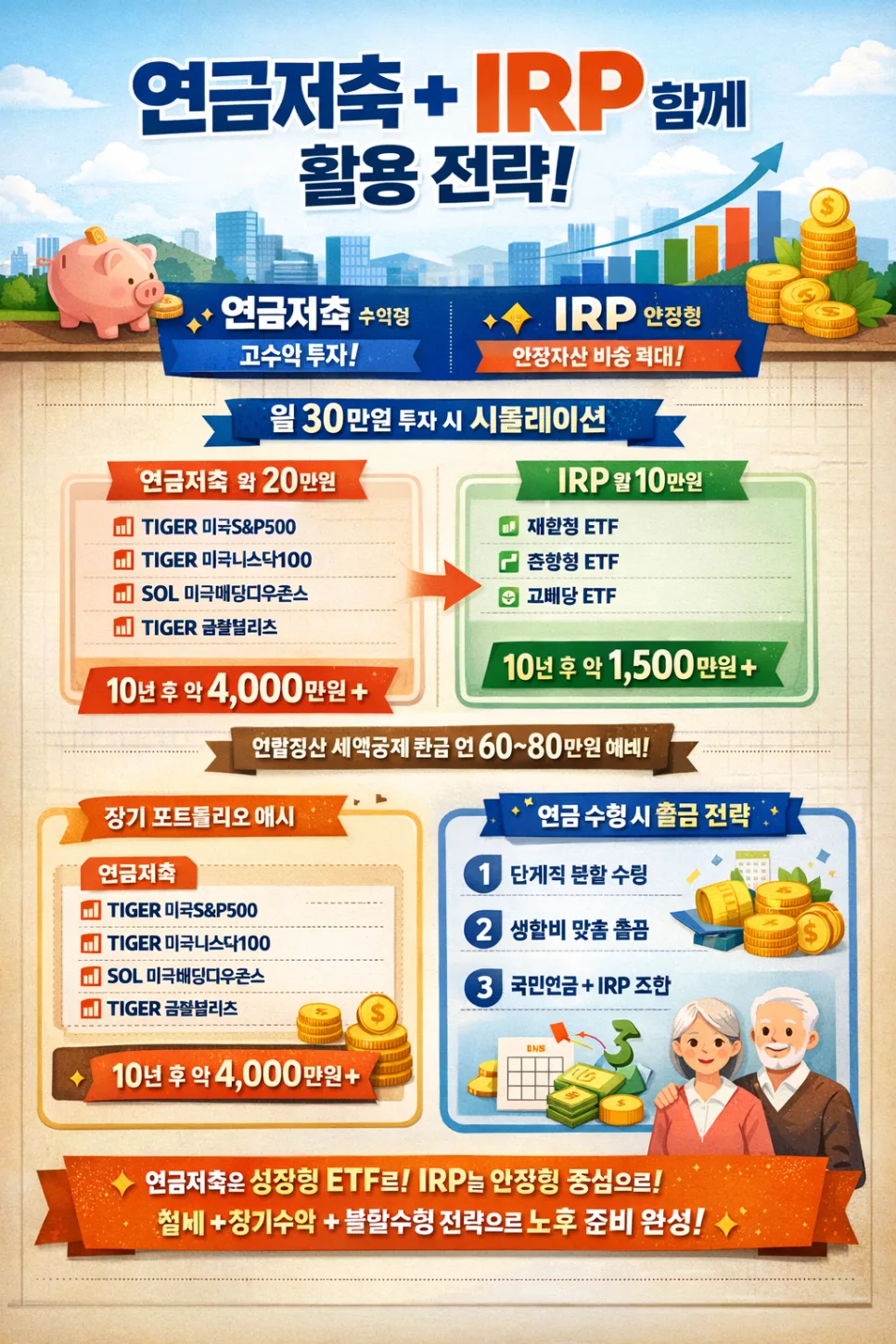
Confused about Korean pension savings accounts (Yeonkeum Jeochuk) versus Individual Retirement Pensions (IRP)? Many overlook the crucial difference: Yeonkeum Jeochuk is for growth, while IRP is for stability. By strategically combining these accounts, you can maximize tax benefits and build long-term wealth for retirement.
What's the Core Difference Between Yeonkeum Jeochuk and IRP?
Yeonkeum Jeochuk and IRP are both popular tax-advantaged retirement savings vehicles in Korea, but they have key distinctions. Yeonkeum Jeochuk offers greater investment flexibility, allowing you to invest in a wide range of ETFs and funds with minimal restrictions on high-risk assets. In contrast, IRP limits investments in high-risk assets to 70% and has stricter rules regarding early withdrawals. Understanding these differences is vital for effective planning. For instance, it's efficient to use Yeonkeum Jeochuk for aggressive growth-oriented ETFs and IRP for more stable, bond-focused ETFs.
What's the Optimal Strategy for Using Yeonkeum Jeochuk and IRP Together?
The most effective strategy involves assigning distinct roles to each account based on their characteristics. Your Yeonkeum Jeochuk account should focus on maximizing long-term returns by investing in growth-oriented ETFs, particularly those tracking the US S&P 500 or Nasdaq 100. For Korean taxpayers with a total annual income below ₩55 million (approx. $41,000 USD), contributing the maximum ₩4 million (approx. $3,000 USD) to Yeonkeum Jeochuk offers a significant tax deduction of 16.5%, providing substantial year-end tax refunds. For the remaining contribution limit up to a total of ₩7 million (approx. $5,200 USD) across both accounts, utilize your IRP. Considering IRP's 70% limit on high-risk assets, focus on bond ETFs or balanced funds to enhance portfolio stability. This dual-account approach ensures you fully leverage tax benefits while maintaining a healthy balance between growth and security.
What Are the Recommended Portfolios for Yeonkeum Jeochuk and IRP by Age?
Tailoring your portfolio to your age and risk tolerance is key for long-term success. For aggressive investors in their 30s and early 40s, consider allocating 60-70% of your Yeonkeum Jeochuk to growth-focused ETFs like US S&P 500, Nasdaq 100, or global AI/tech funds. Complement this with 30-40% in bond ETFs or balanced funds within your IRP to cushion potential market downturns. As you move into your late 40s, a balanced approach is recommended, slightly reducing equity exposure in both accounts and increasing allocations to bond or mixed-asset ETFs. For conservative investors aged 50 and above, prioritize stability by increasing bond ETF holdings to over 60% in your IRP and opting for dividend or balanced ETFs in your Yeonkeum Jeochuk. This age-specific strategy helps optimize compounding and secure your retirement nest egg.
What Should You Watch Out For When Investing in Yeonkeum Jeochuk and IRP?
Approaching retirement savings with Yeonkeum Jeochuk and IRP requires a long-term perspective and attention to several key details. Firstly, prioritize maxing out your Yeonkeum Jeochuk contributions before contributing to your IRP to fully utilize the higher tax deduction limit available for Yeonkeum Jeochuk. Secondly, minimize long-term costs by selecting ETFs with low management fees, as these can significantly impact your overall returns. Thirdly, maintain consistent contributions even during market downturns; this discipline is crucial for maximizing the benefits of compounding. Fourthly, as you near retirement, gradually shift more assets into your IRP to enhance investment stability. Finally, a yearly portfolio review and occasional rebalancing are usually sufficient; avoid excessive trading. Adhering to these principles will pave the way for successful retirement fund accumulation.
For more details, check the original source below.





