As South Korea gears up to launch its 5th generation of health insurance (Silbi insurance) in May 2026, many existing policyholders are wondering about the implications. This new generation focuses on enhanced management of non-covered medical expenses and a simplified benefit structure, meaning your monthly premiums could fluctuate based on your actual hospital visit frequency.
Why is Korean Health Insurance Changing Again?
South Korea's health insurance system, often referred to as 'Silbi' (short for 'Sil-se-dae Bon'), has undergone several reforms to adapt to changing healthcare landscapes. The primary drivers behind the upcoming 5th generation reform are the escalating deficits faced by insurance providers and a surge in the utilization of non-covered medical services, sometimes termed 'medical shopping.' The goal is to create a more intuitive and straightforward system that consumers can easily understand. Ultimately, this reform aims to reduce the financial burden on individuals who use healthcare services infrequently, while ensuring those who utilize non-covered treatments more often contribute proportionally. For instance, services like manual therapy or non-covered injections are expected to face stricter management.

These adjustments are intended to stabilize premium increases over the long term and encourage more rational insurance choices among consumers. The 4th generation, while offering lower premiums and reasonable co-pays, also presented challenges such as increased costs for non-covered services and potential premium hikes.
Key Differences: 4th Gen vs. 5th Gen Korean Health Insurance
Related Articles
The 4th generation of Korean health insurance was praised for its lower premiums and a co-payment rate of 10-20% for covered services, along with potential discounts based on healthcare usage. However, it had limitations in coverage limits for non-covered services and potential premium surcharges. In contrast, the 5th generation, slated for launch in May 2026, emphasizes stricter management of non-covered expenses and aims to stabilize premiums through improved calculation structures. It also plans to simplify policy terms and conditions for better consumer understanding. A key distinction between the 4th and 5th generations lies in the co-payment rates and management of non-covered services. The 5th generation may introduce tiered co-payments or adjust coverage for certain non-covered items to curb excessive utilization.
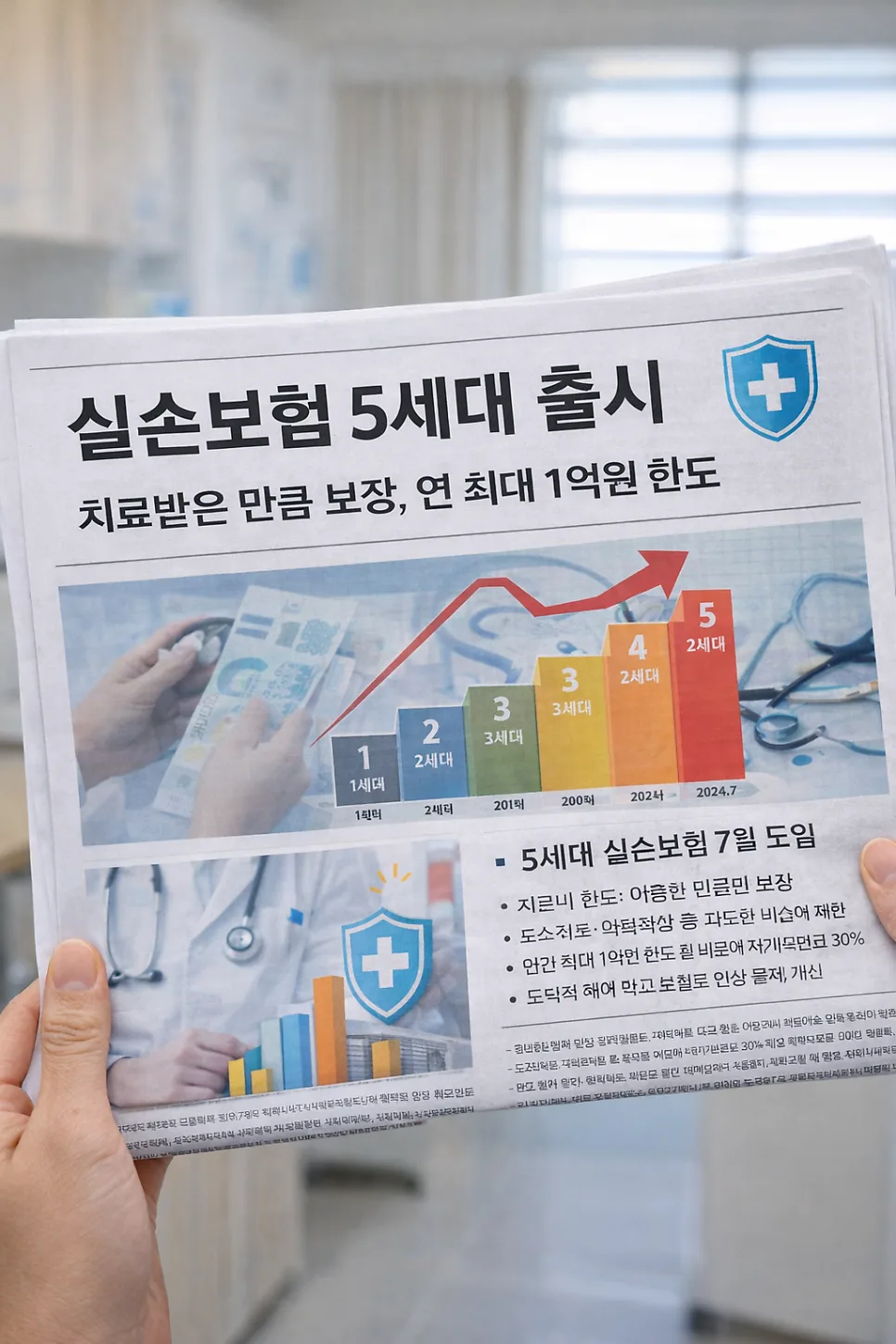
Therefore, carefully assessing your health status and how you use medical services is crucial for choosing the more advantageous plan. For instance, if you frequently use non-covered treatments, the 4th generation might be more beneficial. Conversely, if you are generally healthy and rarely visit hospitals, the 5th generation could offer more cost-effective premiums.
Choosing the Right Korean Health Insurance for You
If you currently have Korean health insurance, the first step is to determine which generation your policy belongs to and review your healthcare utilization over the past year. If you anticipate frequent use of non-covered treatments, the 4th generation's lower co-payment rates and potential discounts might be appealing. Specifically, the 10-20% co-payment for covered services in the 4th generation means you could receive a larger reimbursement for actual medical expenses. On the other hand, if your health is good and you have minimal healthcare needs, the 5th generation could provide long-term premium stability. The 5th generation aims to curb excessive premium hikes through improved calculation methods and enhance consumer comprehension with its simplified structure. However, the specific terms and premiums for the 5th generation will vary by insurance provider upon its release. Consulting with an insurance professional is highly recommended to tailor your choice to your individual needs. Consider your current health, expected medical expenses, and your ability to pay premiums when making your decision.
Important Considerations Before Enrolling in 4th vs. 5th Gen Insurance
While health insurance is considered a vital safety net in Korea, making the wrong choice can lead to financial strain over time. When considering the 4th generation, pay close attention to the coverage limits for non-covered services and the conditions for premium surcharges. Frequent use of non-covered treatments could result in higher-than-expected costs. For the 5th generation, due to the enhanced management of non-covered services, some benefits might be reduced, or co-payment rates could increase. It's essential to thoroughly review the detailed policy terms once they become available. Furthermore, be aware that switching to the 5th generation might mean losing certain benefits previously covered under 1st to 4th generation policies. Therefore, it's crucial to accurately understand your current insurance coverage and compare the pros and cons of both the 4th and 5th generations to make the most advantageous decision for your situation. Seeking advice from an insurance expert for a personalized analysis is strongly advised.
Consult an expert to choose the best health insurance for your needs.