The Korean Growth Fund (KGF) is a 5-year policy-linked investment product designed to boost future industries like semiconductors, biotech, and AI, offering tax benefits. However, its suitability heavily depends on your financial income history and personal cash flow needs. Before investing, you must verify three critical factors to determine if it aligns with your financial goals, especially when compared to alternatives like ISA or ETFs.
Why You Must Check 3 Key Factors Before Investing in the KGF 2026
The KGF is a government-backed initiative, a policy-linked indirect investment fund targeting future growth sectors such as semiconductors, biotech, and AI over a 5-year period. While the income deduction benefits are attractive, many rush to invest without fully understanding the implications. It's crucial to consider your personal financial income history, your cash flow management plan, and compare it with other financial products like ISA (Individual Savings Account) or ETFs (Exchange Traded Funds). Failing to acknowledge the 5-year lock-in period and the specific eligibility criteria for the tax-advantaged account can lead to missed benefits or unexpected drawbacks. Therefore, instead of being swayed by superficial advantages, a thorough review of your financial situation and investment objectives is essential.

What Are the KGF 2026 Sales Schedule and Participating Institutions?
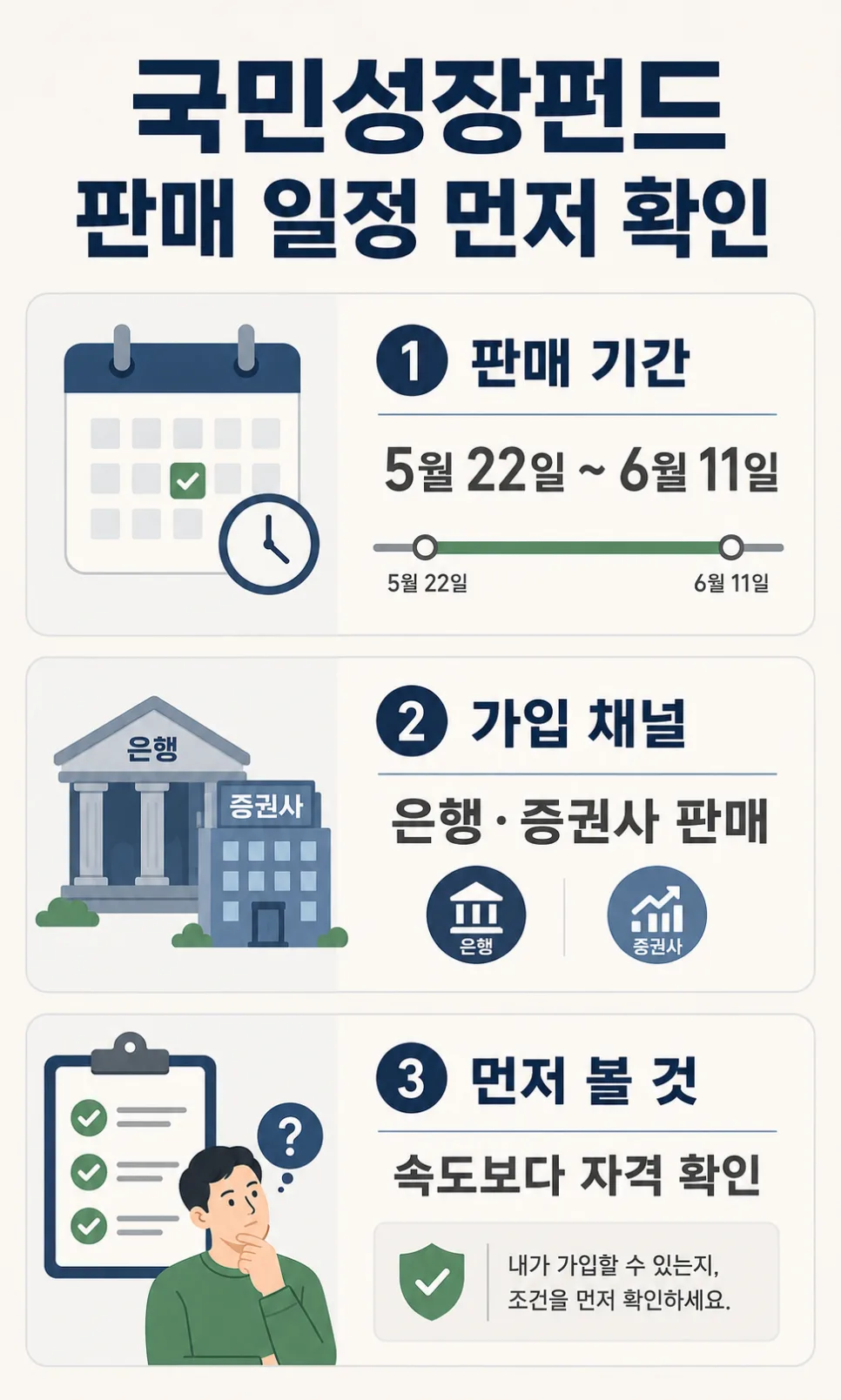
The Korean Growth Fund is scheduled to be available from May 22, 2026, to June 11, 2026, for approximately three weeks, through 25 designated banks and securities firms. The target fundraising amount for the general public is 600 billion KRW (approximately $430 million USD). Given the high interest, it's possible the fund could reach its target and close early. Therefore, potential investors should mark their calendars and be ready to apply. However, focusing solely on the sales schedule or which institution might process applications faster is less important than verifying if the fund aligns with your investment profile and if you qualify for the tax benefits. A calm, informed approach is more beneficial than a hasty decision driven by fear of missing out.
How to Check Your Financial Income Tax History for KGF Exclusive Account Eligibility?
A key benefit of the KGF is the income deduction, but this requires investing through an exclusive account with specific eligibility rules. The most critical condition is that you must not have been subject to comprehensive financial income tax assessment in any of the past three years (2023-2025). This means high-income earners who regularly pay taxes on their combined interest and dividend income may not be eligible for this primary benefit. You can check your personal financial income tax history by logging into the National Tax Service's Hometax website and navigating to the 'Inquiry/Issuance' menu, then selecting 'Financial Income Inquiry.' If your total interest and dividend income exceeded 20 million KRW (approximately $14,500 USD) in any of those years, you cannot open the exclusive account. Confirming this detail is vital before proceeding.
What Are the Actual Pros and Cons of the KGF Compared to ISA and ETFs?
The Korean Growth Fund has a fixed 5-year investment term with limited options for early withdrawal, meaning your capital will be locked in for that period. This makes it suitable only for long-term surplus funds, not for emergency cash. In contrast, an ISA (Individual Savings Account) allows for flexible management over at least 3 years, with some benefits retained even upon early termination. ETFs (Exchange Traded Funds) offer high liquidity, allowing for easy buying and selling at any time. Furthermore, the KGF's income deduction benefit is most effective for those *not* subject to comprehensive financial income tax. If liquidity is a priority or you already have substantial financial income, ISA or ETFs might be more practical and advantageous alternatives. Carefully comparing the features of each product against your personal financial plan and investment goals is essential for making the right choice.
Before investing in the KGF, check detailed comparisons and criteria.