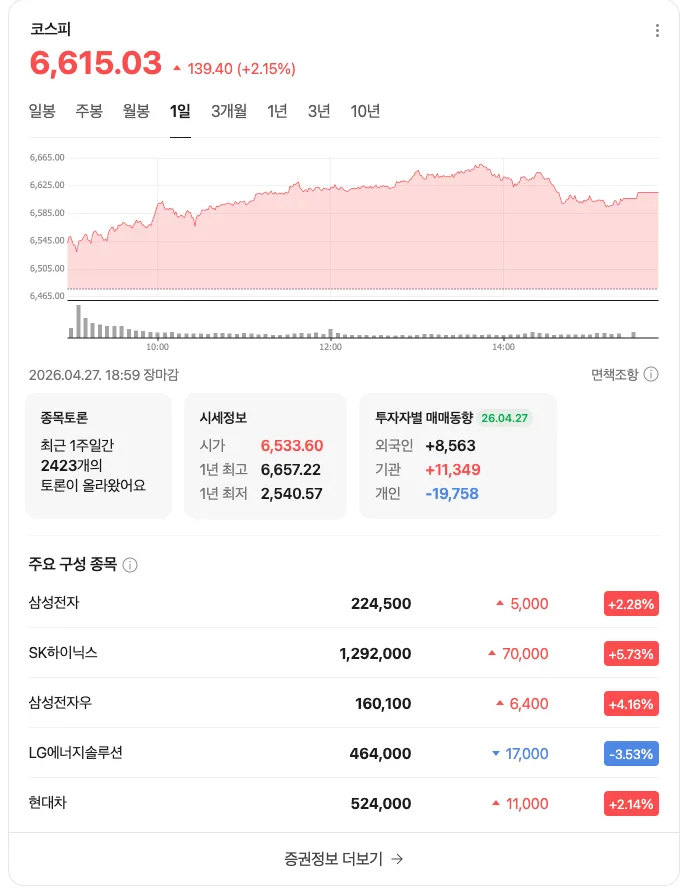
As of April 27, 2026, the KOSPI (Korea Composite Stock Price Index) surged past the 6,600 mark, driven by a powerful rally in semiconductor stocks and a strong comeback from the robotics and biotech sectors. Foreign and institutional investors were key drivers, absorbing selling pressure from retail investors to fuel the market's ascent.
What Fueled the KOSPI's Surge Past 6,600 on April 27, 2026?
The South Korean stock market kicked off the week of April 27, 2026, with a record-breaking rally. The KOSPI decisively broke through the symbolic 6,600 level, while the KOSDAQ also experienced a significant upswing, propelled by strong investor sentiment in the robotics and biotech sectors. A defining characteristic of the day was the 'twin-pull' buying by foreign and institutional investors, who actively absorbed the selling volume from retail investors taking profits. This robust buying activity demonstrated the market's underlying strength, even with the USD/KRW exchange rate remaining high around 1,480.
Which Sectors Led the Market Rally?
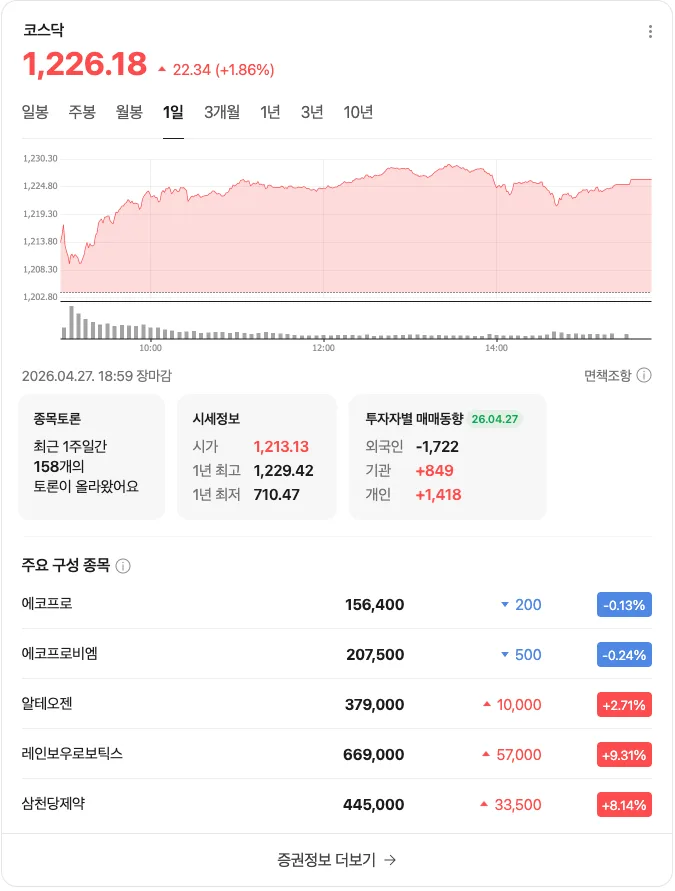
The standout sectors on April 27, 2026, were undoubtedly semiconductors, robotics, and biotech. In the semiconductor space, SK Hynix experienced a remarkable surge of over 5%, signaling a potential return to its '1.3 million won Hynix' era, fueled by strong institutional conviction in AI semiconductor demand. Samsung Electronics also maintained its strong position above 220,000 won, supported by consistent foreign buying. On the KOSDAQ, the robotics sector, led by Rainbow Robotics, saw an impressive rally of over 9%, significantly boosting the index. The biotech sector, spearheaded by companies like Samsungdangs, also made a strong comeback, emerging as new growth engines while the 'Ecopro brothers' experienced a slowdown.
What Caused the Pullback in the Battery Sector?
While the semiconductor, robotics, and biotech sectors were soaring, the secondary battery sector faced headwinds. LG Energy Solution, for instance, saw a decline of over 3%. This pullback is attributed to a clear rotation of capital within the market. Investor focus and funds shifted towards high-growth sectors like semiconductors, biotech, and robotics, leading to a temporary decrease in capital inflow into the battery sector. Such sector rotation is a natural phenomenon as markets mature, and investors should pay close attention to evolving sector trends.
What Investment Strategies Should Investors Consider Amidst These Market Trends?
During periods of significant market gains, like April 27, 2026, it's crucial to maintain a balanced perspective and conduct a sober analysis amidst the 'overheating' concerns. Firstly, pay close attention to the quality of trading volume. A market where retail investors are selling and foreign and institutional investors are buying is a strong indicator of sustained index growth. The concentration of institutional funds in large-cap semiconductor stocks, in particular, signifies strong confidence in these companies' future earnings. Secondly, consider the stability of index-tracking products. When individual stocks experience high volatility due to thematic shifts, consistently investing in index-tracking ETFs, such as those mirroring the KOSPI 200 or the S&P 500, can be a sound strategy for long-term, stable returns. Thirdly, the art of patience is paramount. Investors who adhere to their long-term investment principles amidst market fluctuations will ultimately reap the rewards. Therefore, it's wise to review your asset allocation strategy, consider taking some profits in overheated sectors, and simultaneously explore undervalued blue-chip stocks for a well-rounded approach.
For more details, check the original source below.





