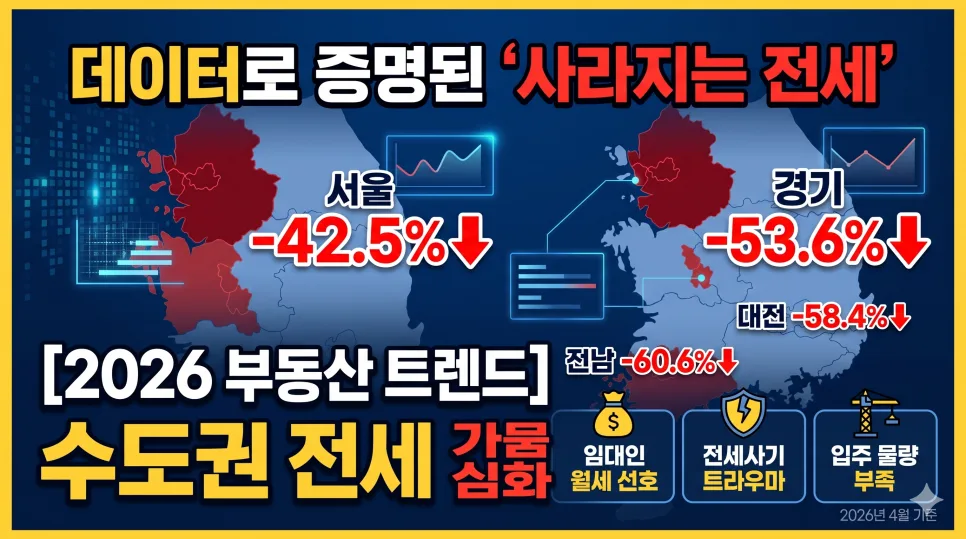
As of April 30, 2026, the number of available 'jeonse' (lump-sum deposit) apartments nationwide has plummeted by up to 60% year-over-year, signaling a significant 'jeonse' market contraction. This trend is expected to intensify rental market pressures, particularly in Seoul and the surrounding Gyeonggi province.
Why Are Jeonse Apartments Disappearing Nationwide?
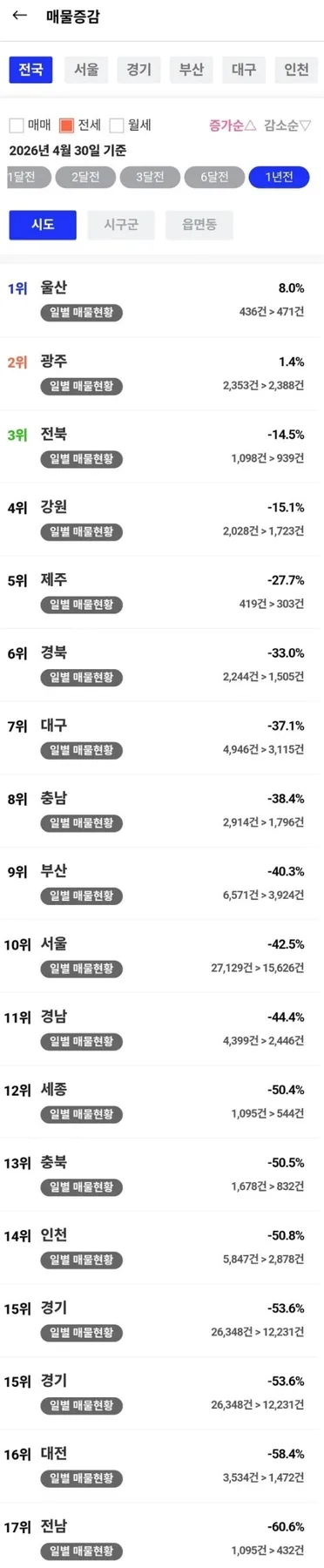
Recent data reveals a shocking decline in jeonse listings over the past year. Provinces like Jeonnam have seen a 60.6% drop, Daejeon 58.4%, Gyeonggi 53.6%, Incheon 50.8%, and Seoul itself 42.5%. This isn't just a perceived issue; it's a statistically proven structural shift in Korea's rental market. For instance, Jeonnam province experienced a decrease from 1,095 jeonse listings a year ago to just 432. This nationwide phenomenon is significantly exacerbating the rental crunch, especially in the Seoul metropolitan area.
Seoul & Gyeonggi Apartment Jeonse Listings: A 3-Year Trend Analysis
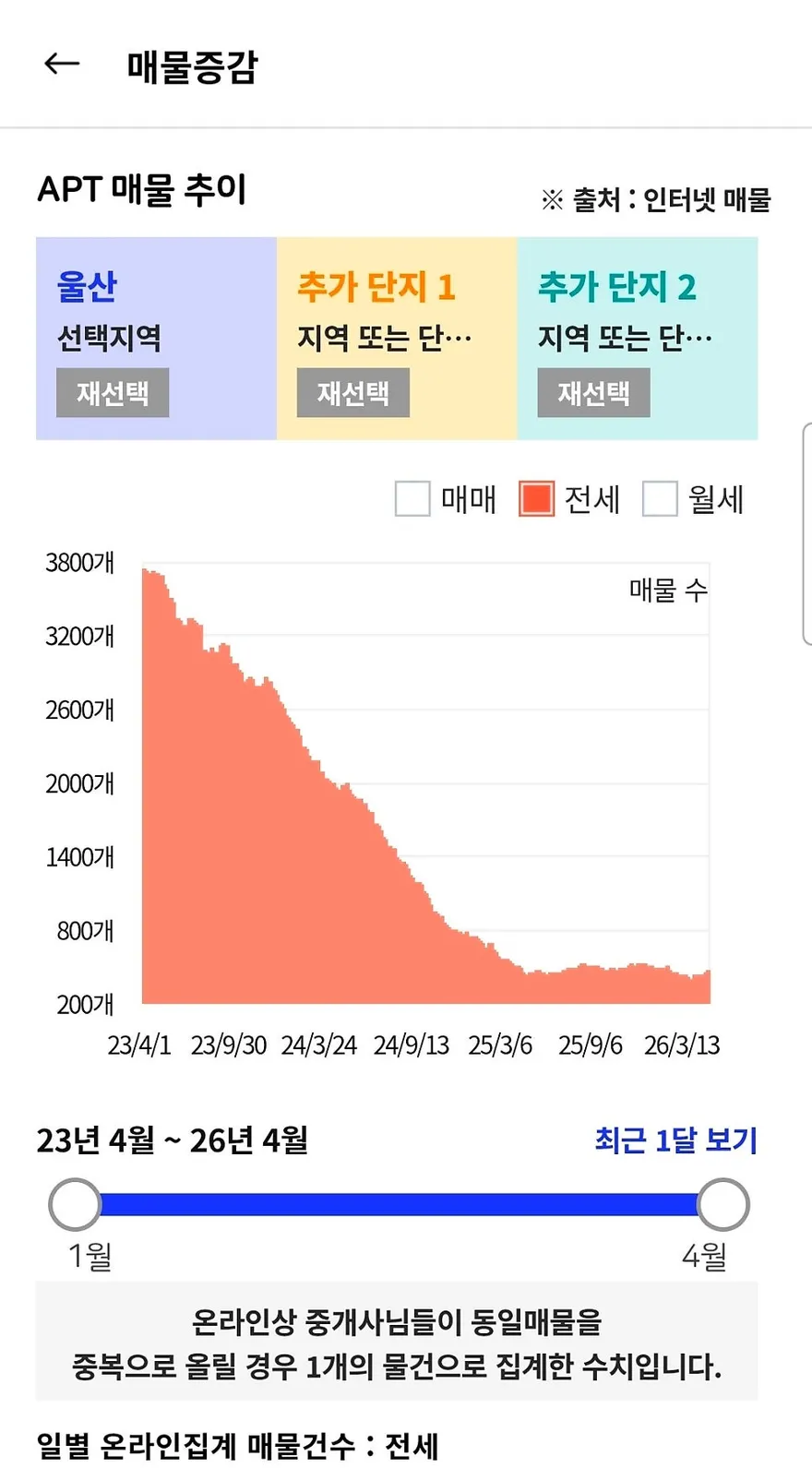
The long-term trend for jeonse listings in Seoul and Gyeonggi paints an even starker picture. In April 2023, Seoul had approximately 44,000 jeonse listings. By April 2026, this number has drastically fallen to around 15,000, representing a nearly two-thirds reduction. This sharp decline is attributed to several key factors: landlords increasingly preferring monthly rent (wolse) due to higher potential returns and reduced management hassle, lingering public distrust and caution following widespread 'jeonse' fraud incidents, and a persistent shortage of new housing supply. This confluence of factors is pushing the jeonse market to historic lows and driving a rapid transition towards a wolse-dominated rental landscape.
The Rise of Wolse (Monthly Rent) and the Decline of Jeonse
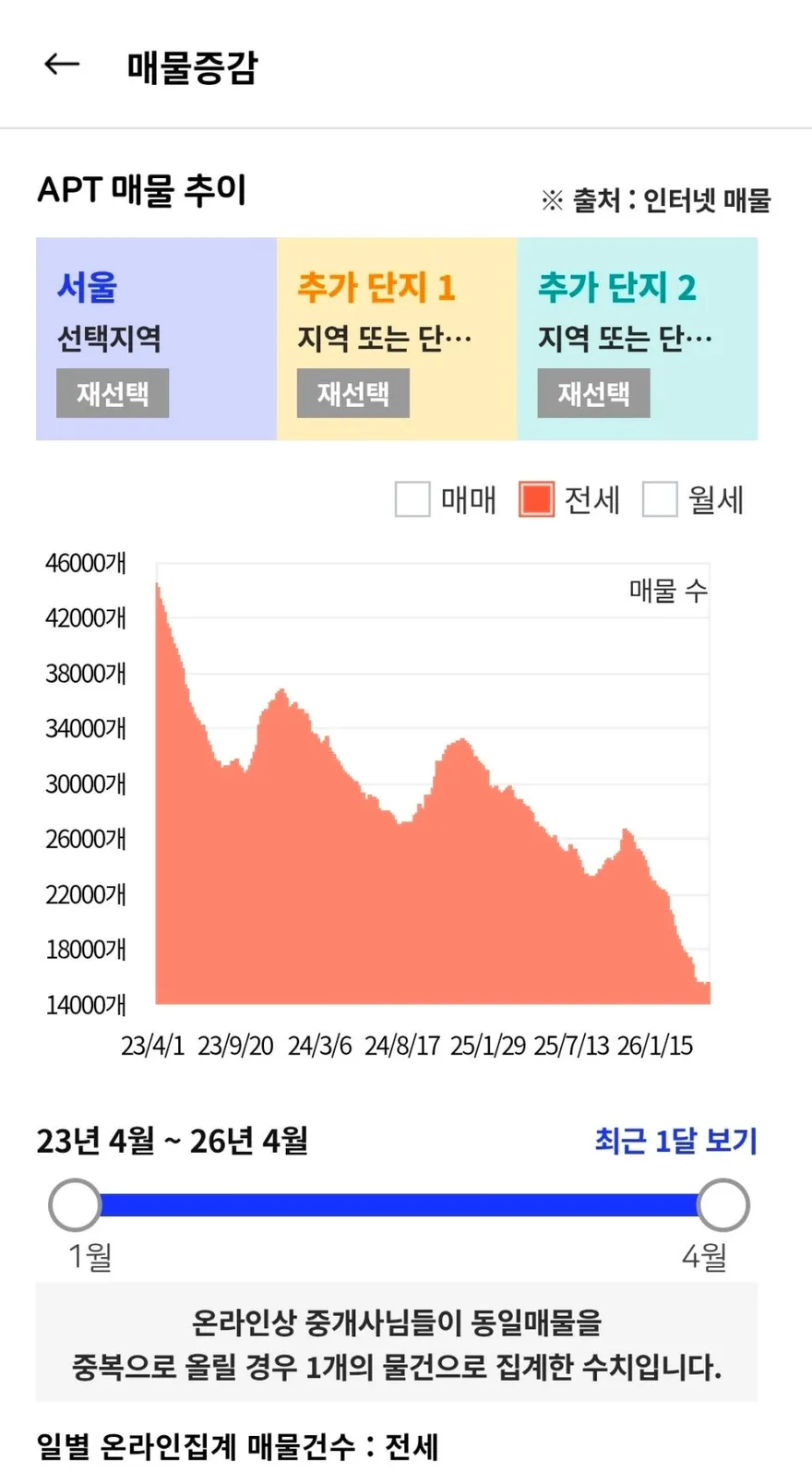
The shift from jeonse to wolse is a complex economic phenomenon driven by both landlord incentives and tenant behavior. Landlords find wolse more predictable and profitable, especially in a rising interest rate environment where holding large deposit sums can be less attractive. The trauma from recent 'jeonse' scams has also made tenants more risk-averse, preferring the perceived security of paying monthly rent over tying up a large lump sum. Furthermore, insufficient new apartment construction means fewer units are entering the market, intensifying competition for the remaining jeonse properties and driving up their prices, making wolse a more accessible option for many.
Future Outlook: Intensifying Rental Scarcity and Price Hikes
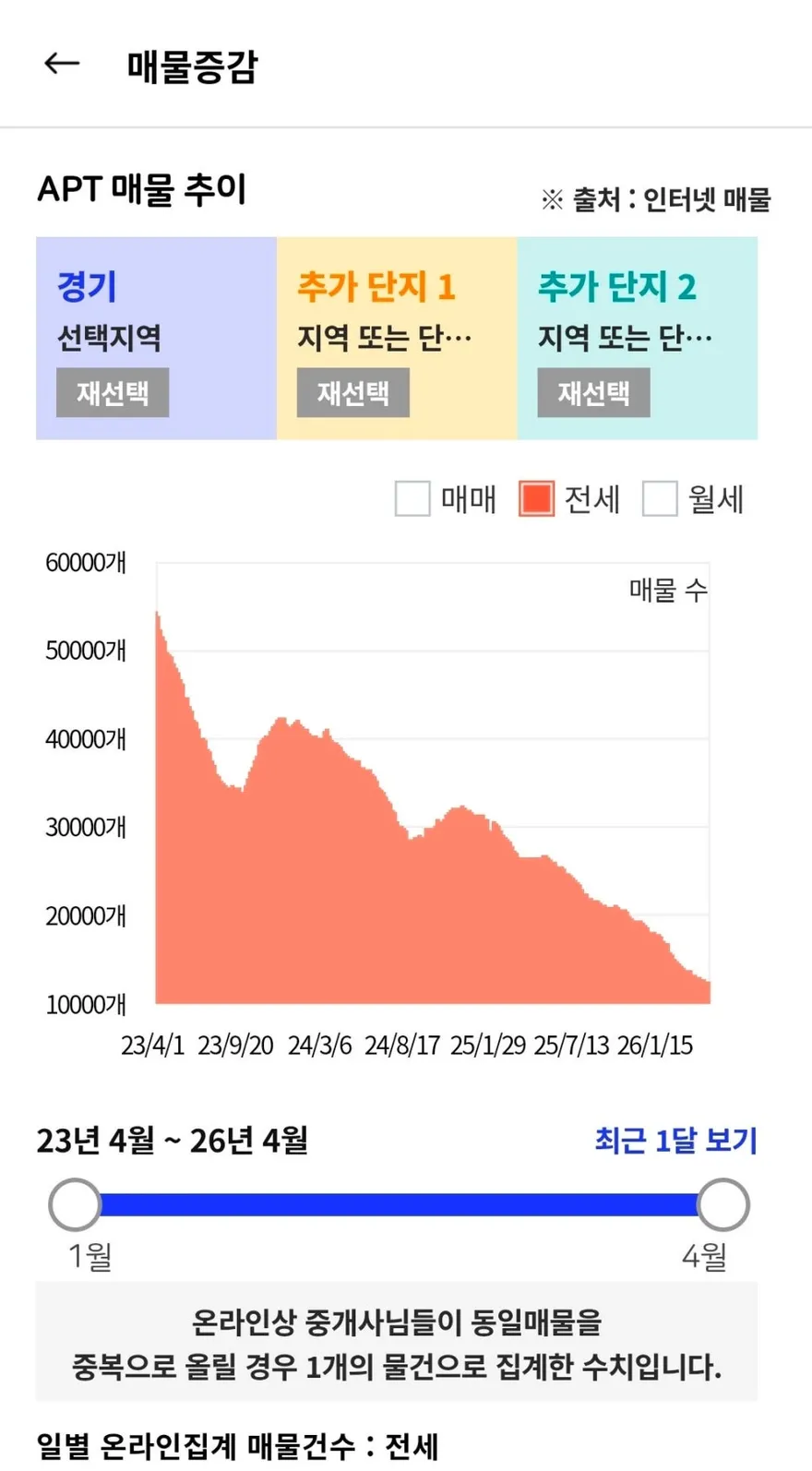
Looking ahead, the scarcity of jeonse properties is projected to worsen, leading to further increases in jeonse prices and a continued acceleration of the market's shift towards wolse. As fewer jeonse units become available, competition for the remaining ones will intensify, driving up deposit amounts. This will inevitably push more renters towards the wolse market, further increasing demand and rental costs there as well. This creates a challenging environment for renters, particularly young families and first-time homebuyers who rely on jeonse as a stepping stone to homeownership. The 'jeonse' system, once a cornerstone of Korean housing, is rapidly evolving, and renters must adapt to this new reality.
Navigating Jeonse Contracts Amidst Market Uncertainty
For those still seeking jeonse contracts, exercising extreme caution and ensuring legal protections are paramount. It is crucial to secure legal 'diligence rights' (대항력, daehangnyeok), which protect your deposit if the property ownership changes or faces foreclosure. Thoroughly vetting landlords, verifying property ownership, and understanding all contract terms are essential steps to prevent falling victim to 'jeonse' fraud. Given the market volatility and the risks involved, consulting with real estate professionals or legal experts specializing in Korean property law is highly recommended before signing any agreement. This ensures you are fully aware of your rights and the potential risks associated with jeonse contracts in the current climate.
For more details on 2026 real estate trends, check the original source below.