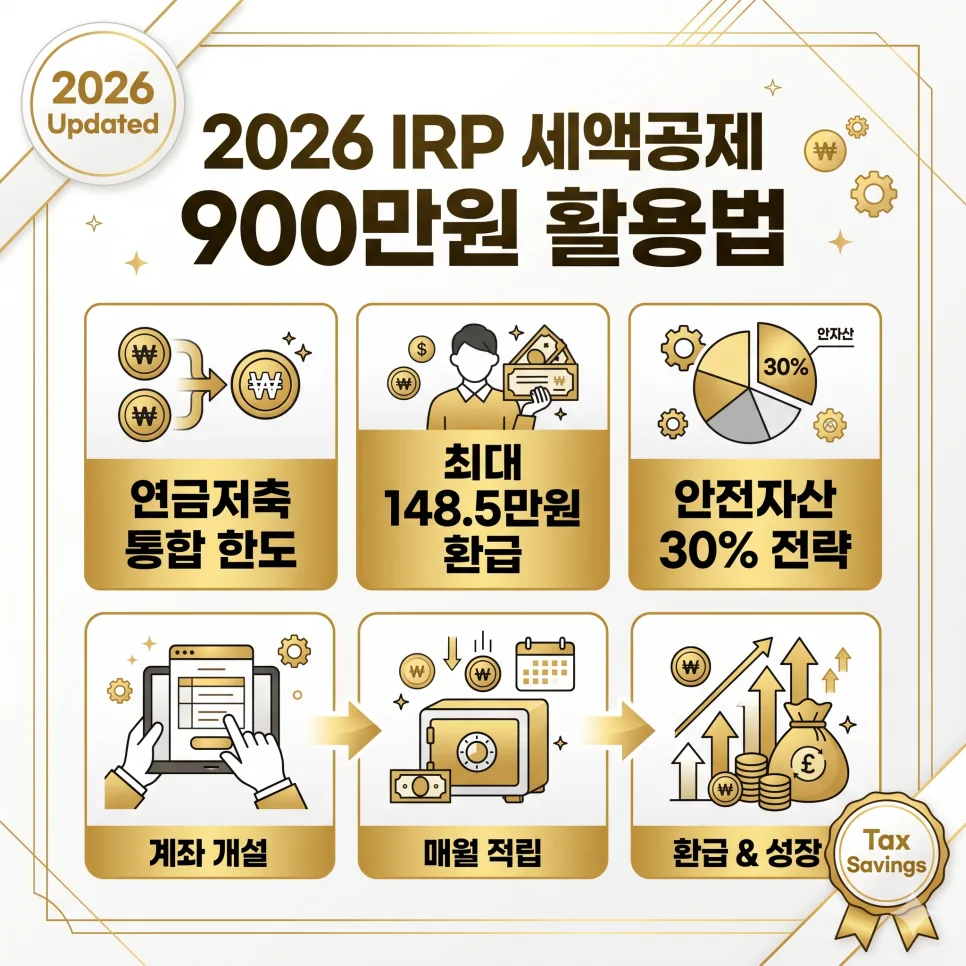
The 2026 IRP tax deduction limit is a combined $6,300 (₩9 million) with a Pension Savings account, potentially offering up to $1,000 (₩1.485 million) in tax refunds for those earning under $37,000 annually. This strategy is a powerful way to prepare for retirement while boosting your year-end tax return, often called the '13th-month salary' in Korea.
What Are the 2026 IRP Tax Deduction Limits and Expected Refunds?
The Individual Retirement Pension (IRP) is becoming essential for financial planning. For 2026, the tax deduction limit for IRP remains combined with Pension Savings accounts at a total of $6,300 (₩9 million) per year. While Pension Savings accounts alone allow deductions up to $4,200 (₩6 million), utilizing an IRP can add an extra $2,100 (₩3 million) to your deductible amount, maximizing your total $6,300 (₩9 million) limit. The refund percentage depends on your annual income: individuals earning under $37,000 (₩55 million) can benefit from a 16.5% deduction rate, potentially receiving up to $1,000 (₩1.485 million) back. Those earning above this threshold will have a 13.2% deduction rate, with a maximum refund of around $800 (₩1.188 million). Compared to many other financial products, this offers a remarkably high guaranteed return on investment.
Who Can Open an IRP Account?
IRP accounts are not just for traditional employees; they are accessible to anyone with earned income, including freelancers, small business owners, and public sector workers. Furthermore, if you choose to receive your severance pay into an IRP account, you can benefit from a 30% to 40% reduction in severance tax. This offers significant tax savings at the point of withdrawal. To maximize benefits, it's crucial to establish a habit of making regular monthly contributions to meet the annual limit. Remember, any unused portion of the annual contribution limit cannot be carried over to the next year, so always check your contribution status before year-end.
How Can You Maximize Returns Within the 30% Safe Asset Rule for IRP?
IRP accounts have a regulatory requirement, under pension fund supervision rules, to invest at least 30% of assets in safe options like savings accounts or government bonds. While this protects your retirement funds, it can limit aggressive investment strategies. However, recent innovations offer ways to comply with the rule while potentially achieving better returns. Consider using bond-based ETFs or Target Date Funds (TDFs) that match your retirement timeline. For instance, during periods of falling interest rates, long-term bond ETFs can provide capital gains and dividend income. For the remaining 70% of your portfolio, consider investing in ETFs that track major indices like the Nasdaq 100 or S&P 500 for long-term growth potential.
Investing the 30% safe asset portion solely in traditional savings accounts might be a missed opportunity for higher returns. Exploring options like bond ETFs or TDFs can help you achieve better performance while adhering to regulations. The tax on dividends and interest earned within your IRP account is deferred until you withdraw funds as retirement income, allowing you to benefit from compounding growth. Maximizing this compounding effect is key to substantial long-term wealth accumulation.
What Are the Expected Pension System Reforms from 2027 and Long-Term Maintenance Strategies?
The South Korean government is discussing strengthening tax incentives for private pensions alongside reforms to the National Pension system. Starting in 2027, there are plans to ease the health insurance premium calculation basis for individuals owning one or fewer homes who receive pension income. This indicates a government commitment to encouraging citizens to build sufficient retirement funds through enhanced tax and welfare benefits. Additionally, AI-powered robo-advisor services that automatically adjust asset allocations based on age and retirement timelines are expected to expand across the financial sector.
Ultimately, an IRP serves as a robust safety net for your retirement and a cornerstone of tax efficiency. The most critical step now is to select a financial institution that aligns with your investment preferences and to create a financial plan to fully utilize the increased tax deduction limits. While immediate tax refunds are appealing, focusing on the stable income stream you'll receive in retirement decades from now makes opening an IRP today a significant investment in your future. Share this information with friends and family to encourage collective smart retirement planning. Check your primary bank or brokerage app to see if you can open an account today.
What Should You Be Cautious About When Opening an IRP Account?
A common mistake when managing an IRP is misunderstanding the 30% safe asset rule and investing only in savings accounts. It's advisable to consider a diversified approach within safe assets, including options like long-term bond ETFs, to account for interest rate fluctuations. Since contribution limits cannot be carried over, meticulously track your contributions throughout the year to ensure you meet the annual cap. Mid-term withdrawals are subject to a 16.5% income tax, so maintaining the account until retirement age maximizes tax benefits. The optimal IRP strategy can vary based on individual income, risk tolerance, and retirement timeline; consulting a financial advisor is recommended for personalized guidance.
For more details, check the original source below.





