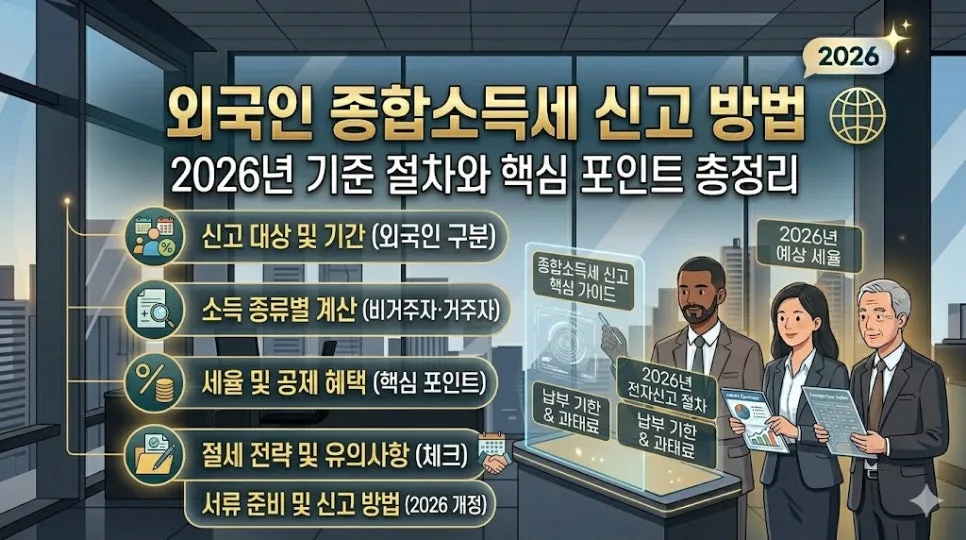
For foreigners earning income in Korea as of 2026, filing a comprehensive income tax return is mandatory. Understanding whether you're classified as a resident or non-resident, and the specific types of income you've earned, will dictate your filing process and obligations. Filing accurately can help you avoid penalties and potentially claim tax refunds.
Do Foreigners Have to File Korean Income Tax?
Yes, if you earn any form of income in Korea – whether it's from business, freelance work, rental properties, interest, or dividends – you are obligated to file a comprehensive income tax return. The key factor is where the income was generated, not your nationality. Most income earned while physically present in Korea is subject to taxation. Many foreign freelancers and business owners overlook this, leading to penalties for non-filing. Therefore, the first step is to carefully assess if you've earned any taxable income in Korea.
Resident vs. Non-Resident: How Are Foreigners Classified in Korea?
One of the most confusing aspects of Korean income tax for foreigners is the distinction between residents and non-residents. Generally, if you reside in Korea for 183 days or more, you are classified as a 'resident.' In this case, you may be liable for taxes not only on your Korean income but also on certain types of foreign-sourced income. Conversely, if your stay in Korea is less than 183 days or you don't have a permanent residency purpose, you're considered a 'non-resident.' Non-residents are only taxed on income earned within Korea. Correctly determining your status is crucial as it affects your tax scope and calculation methods.
Korean Income Tax Filing Process for Foreigners
The comprehensive income tax filing period in Korea is annually in May, covering income earned in the previous calendar year (January 1 to December 31). For instance, income earned in 2025 will be filed in May 2026. There are three primary methods for filing. First, online filing through Hometax (the National Tax Service portal) is the most common and convenient method, accessible to foreigners after identity verification. Second, you can file in person at a local tax office. Third, you can hire a tax professional (세무사, semusa) to handle the filing on your behalf. This option is particularly useful if you're not fluent in Korean or find the process complex.
Required Documents and Key Considerations for Foreigner Tax Filings
To file your comprehensive income tax return, you'll need documents proving your income. This may include contracts, invoices, bank statements for business or freelance income, and lease agreements for rental income. You'll also need a copy of your alien registration card (외국인등록증) for identification. For foreigners, it's especially important to be mindful of potential double taxation issues if you have foreign-sourced income or foreign exchange transactions. Carefully gathering these documents allows you to claim necessary expenses, which can reduce your taxable income and, consequently, your final tax liability. If you've overpaid, you can claim a refund through the filing process.
Common Mistakes in Korean Income Tax Filing for Foreigners
Foreigners often make several common mistakes when filing their comprehensive income tax in Korea. The first is failing to file at all, despite earning income within the country. Another frequent error is incorrectly classifying oneself as a non-resident when the duration of stay or intent suggests residency, leading to an incomplete tax return. Additionally, not properly documenting expenses or failing to claim eligible deductions can result in paying more tax than necessary. Finally, misunderstanding the tax implications of foreign income or overseas assets can lead to unexpected tax liabilities or missed opportunities for tax relief.
For more details, check the original source below.





