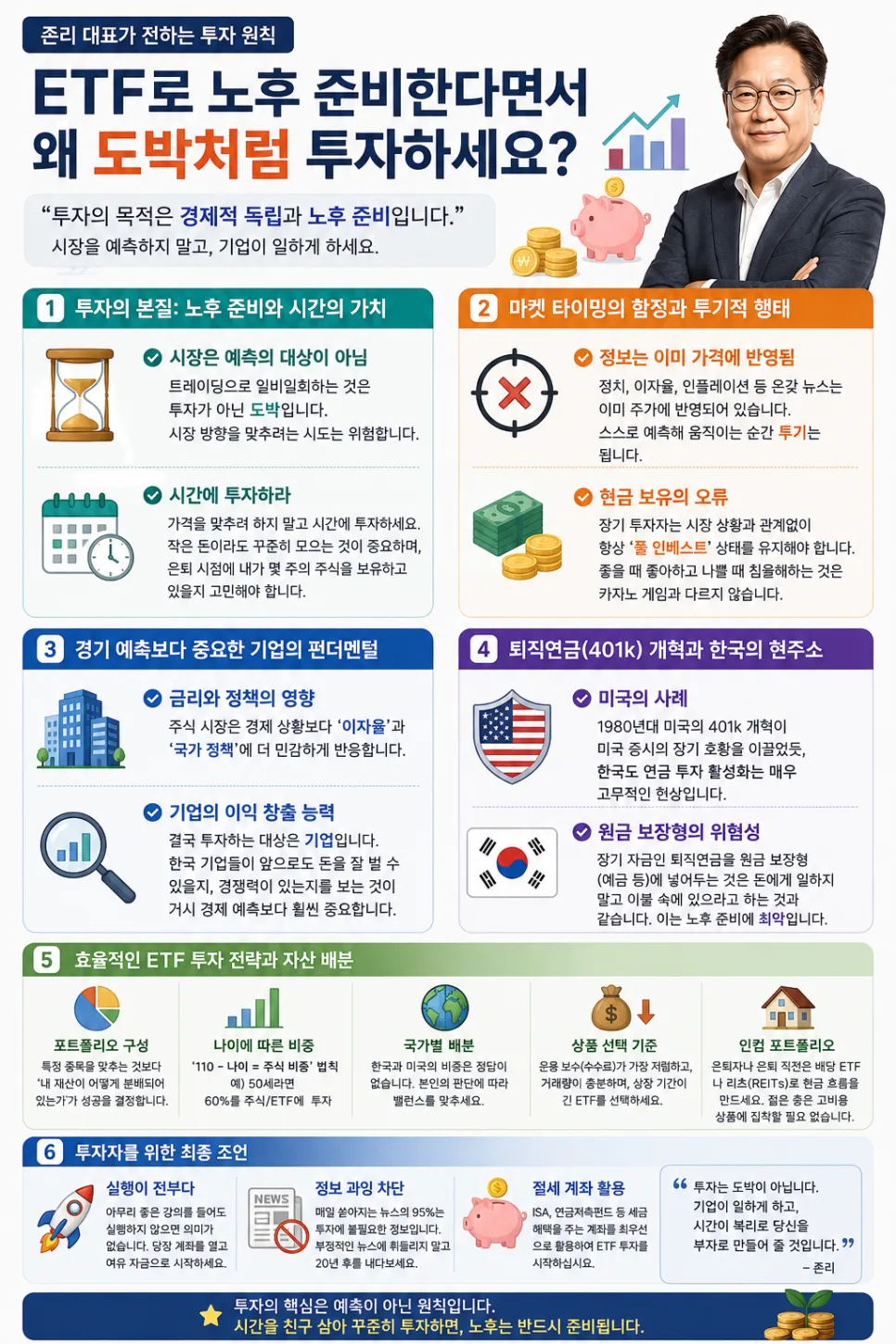
Planning for retirement with ETFs? This guide cuts through the noise, focusing on smart strategies for 2026. Learn to invest in 'time' rather than chasing market predictions, and efficiently allocate assets using low-cost ETFs. We'll cover expert-backed approaches and how to leverage tax-advantaged accounts.
How to Invest in ETFs for Retirement in 2026 Without Gambling
The true essence of investing is achieving 'financial independence' and securing your 'retirement,' which means making your money work for you even when you're not. Constantly trying to predict market movements is akin to gambling. Instead of trying to time the market, focus on investing in 'time' by consistently accumulating assets, even with small amounts. This approach harnesses the power of compounding for long-term wealth growth. Your primary goal should be to determine how much wealth you'll have by your retirement age, rather than obsessing over short-term gains of 20-30%. Experience shows that consistency is far more powerful than chasing high short-term returns.
Why Are Company Fundamentals More Important Than Economic Forecasts for ETFs?
The stock market doesn't always move in lockstep with the broader economy; sometimes, it even rallies during economic downturns due to interest rate cuts. Therefore, focusing on macroeconomic predictions is less crucial than analyzing the earning potential and competitive strength of the companies within your ETFs. Assessing whether Korean companies, for example, have sustainable growth prospects and maintain global competitiveness is key to long-term investment success. Analyzing a company's fundamentals offers a more predictable path to returns than trying to forecast economic cycles.
How Should You Utilize Retirement Accounts Like IRP and Pension Savings for ETF Investing?
The landscape of retirement savings in Korea is evolving, with a growing acceptance of stock investments, mirroring the positive impact of the US 401(k) reforms in the 1980s that fueled a long economic boom. Keeping retirement funds solely in principal-protected products like savings accounts means your money isn't working effectively for you. From a retirement planning perspective, this is a suboptimal strategy. It's crucial to actively consider investing in stock-based ETFs through accounts like the Individual Retirement Pension (IRP) or Pension Savings plans. Understanding the differences between personal pension accounts and IRPs will help you choose the right option for your needs.
What Are the Criteria for Efficient ETF Investment Strategies and Asset Allocation?
While ETFs offer convenience and low fees, it's wise to avoid complex products marketed for their complexity, such as leveraged or inverse ETFs. Successful investing hinges on 'asset allocation' rather than picking individual winning stocks. A practical guideline is the '110 minus your age' rule to determine your stock allocation percentage. For instance, a 50-year-old might allocate around 60% to stock-based ETFs. Prioritize ETFs with the lowest expense ratios, sufficient trading volume, and a long listing history. Retirees or those nearing retirement might consider dividend ETFs or REITs (Real Estate Investment Trusts) for a steady income stream.
What Are Common Mistakes in ETF Investing and How Can They Be Prevented?
Acquiring information is useless without action. The most critical step is to open an account and start investing with your available funds immediately. Furthermore, about 95% of daily news is irrelevant to your investments; avoid being swayed by negative headlines and maintain a long-term perspective, looking 20 years ahead. It's wise to prioritize tax-advantaged accounts like ISAs (Individual Savings Accounts) or Pension Savings funds for your ETF investments. Remember, the optimal investment strategy can vary based on individual circumstances, so consulting with a financial advisor is recommended.
For more details, check the original source below.





