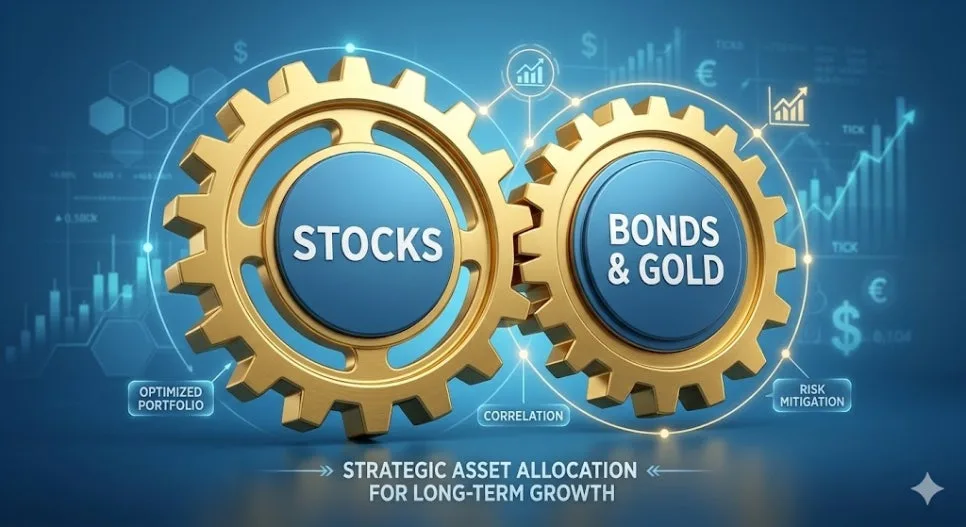
In 2026, the secret to growing your wealth, even amidst economic uncertainty, lies in smart asset allocation. Discover the core global asset allocation models tailored for American workers and learn how to build a diversified portfolio using AI and Excel.
Why Understanding Asset Allocation is Crucial for US Workers in 2026
Many American professionals feel anxious watching their investment accounts fluctuate with market swings, even when diligently saving from their paychecks. If this volatility is impacting your focus on your main job, asset allocation can be the solution. It's not just about chasing higher returns; it's a scientific approach to safeguarding your assets during economic downturns and ensuring a stable income stream in retirement. Understanding key metrics like 'correlation' and 'volatility drag' is vital. Low correlation between assets can help buffer losses during market crises, while volatility drag significantly increases the returns needed to recover from losses. Minimizing this drag is key to maximizing long-term compounding. Portfolios that effectively manage volatility often emerge as the long-term winners.
Top Global Asset Allocation Models for US Workers in 2026
Explore three proven passive asset allocation models, validated by leading global investment experts. First, the 'traditional 60/40 model' balances 60% global stocks with 40% intermediate-term bonds, targeting an approximate 7-8% expected return with a maximum drawdown of around -20%. This is suitable for 30-40 year-old professionals seeking a balance between growth and stability. Second, the 'Permanent Portfolio' allocates 25% each to stocks, long-term bonds, gold, and cash. It offers an expected return of about 5-6% with a remarkably low maximum drawdown below -10%, providing extreme stability by hedging against inflation and deflation. This is recommended for those in their 50s prioritizing stability. Third, Ray Dalio's 'All Weather Portfolio' combines stocks, long-term and intermediate-term bonds, and commodities like gold. It aims for an expected return around 7% with a maximum drawdown of approximately -12%, designed to perform across all economic cycles and ideal for retirement planning. These models are often backtested over 30 years of data.
How to Build Your Own Portfolio with Excel and AI in 2026
Even busy American professionals can establish a robust portfolio management system in about 10 minutes per month. Start by opening an Individual Retirement Account (IRA) or a Roth IRA, and select diversified Exchange Traded Funds (ETFs). Consider global stock ETFs (like those tracking the S&P 500), US Treasury bond ETFs (e.g., 10-year Treasury), and alternative asset ETFs (like gold futures). Next, leverage AI tools like ChatGPT to generate an Excel template that calculates your monthly investment amounts for each asset class based on your target allocation and current prices. This template will include rebalancing formulas. Finally, implement a disciplined strategy of investing a fixed amount monthly (dollar-cost averaging) and rebalancing your portfolio quarterly or semi-annually. This systematic approach ensures consistent asset allocation without constant manual effort.
Key Considerations When Building Your Personal Portfolio
The most critical pitfalls when constructing your personal portfolio are 'excessive greed' and 'frequent tinkering.' These asset allocation models are designed for the long term, and reacting impulsively to short-term market fluctuations by constantly changing your strategy can actually harm your returns. It's also essential to carefully examine the correlation between your chosen assets. Over-allocating to assets highly correlated with stocks, for instance, can diminish your portfolio's defensive capabilities during a downturn. Ultimately, designing a portfolio that truly fits you requires a comprehensive assessment of your investment goals, retirement timeline, and financial situation. Consulting with a qualified financial advisor is highly recommended to tailor a strategy that aligns with your unique circumstances, as the models presented here are general guidelines.
For more details, check the original source below.