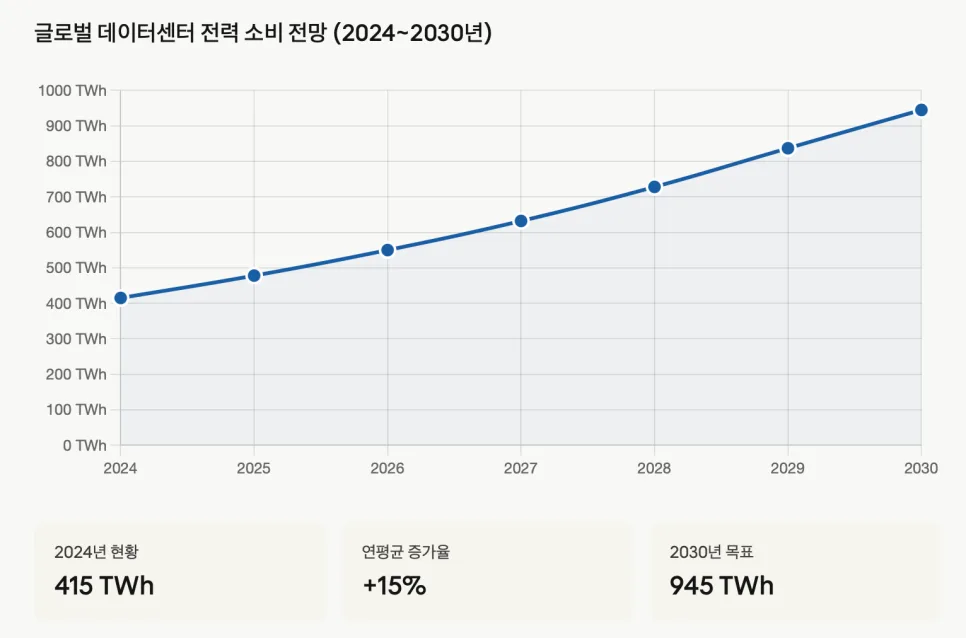
Investing in AI data center power infrastructure presents a massive opportunity, with electricity demand surging over 900% annually. However, current stock prices may already reflect future earnings, necessitating a cautious approach. For 2026, investors must analyze order backlogs and profit margins of key companies.
What's Driving the AI Power Demand Surge?
The rapid advancement of Artificial Intelligence (AI) is fueling an exponential increase in data center electricity consumption. Projections indicate that global data center power usage will more than double by 2030. In South Korea, the demand for power in the Seoul metropolitan area alone is equivalent to that generated by 20 nuclear power plants, highlighting a significant power shortage. While this supply-demand imbalance is a clear opportunity, it's crucial to recognize that the market has likely already priced in these future growth prospects. Stock prices often anticipate future performance, meaning current valuations might already incorporate earnings expected several years down the line. Therefore, instead of solely focusing on optimistic forecasts, it's essential to critically assess how much of the positive outlook is already reflected in current stock prices.
Are Record Profits for AI Power Infrastructure Companies Sustainable?
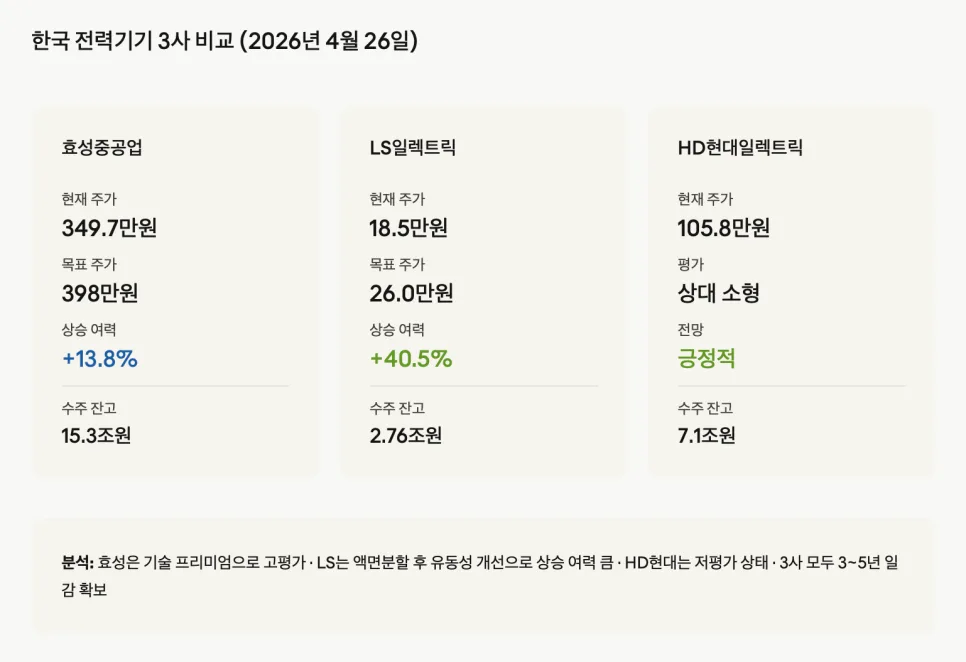
Companies like Hyosung Heavy Industries and LS Electric are reporting record profits and securing multi-trillion won (billions of USD) order backlogs, drawing significant market attention. Hyosung Heavy Industries, for instance, has secured enough orders to last five years and achieved an operating profit margin exceeding 20%. Despite these impressive figures, the stock prices of these companies have surged dramatically, with some experiencing a six-fold increase in just one year. This rapid ascent suggests that current stock prices may already be factoring in future value extending to 2027 or 2028. While large contracts with North American tech giants and substantial order backlogs are positive indicators, the relatively lower profit margins on distribution transformers warrant careful consideration for long-term profitability. It's vital to evaluate whether the current stock valuations have already priced in the projected performance for 2027-2028 and beyond.
The Transformer Lead Time Paradox: Hidden Risks?
The extended manufacturing lead time of approximately three years for transformers, while currently securing future revenue, also presents a significant risk. If global economic conditions slow down by the time these transformers are ready for delivery, customers might delay or cancel orders, leaving companies with substantial inventory and cost burdens. The volatility of raw material prices like copper and steel, coupled with political uncertainties, further complicates the landscape. Even Exchange Traded Funds (ETFs) focused on this sector may not offer complete protection, as assets can become concentrated in a few companies, making them vulnerable to industry-wide downturns. At this juncture, holding a significant cash position (over 50%) and patiently waiting for market corrections is advisable rather than rushing into new investments. Potential risks include exposure to economic cycles due to long lead times, cost management challenges from rising copper prices, delays in US permitting processes, policy shifts, and increasing competition from Chinese manufacturers in the long run.
Smart Investment Strategies for AI Power Infrastructure
In the current high-valuation environment, a more prudent investment strategy involves waiting for a healthy correction of 20-30% from the peak rather than adding to positions at inflated prices. Before making investment decisions, I would closely monitor the consistency of quarterly order intake and whether operating profit margins can maintain a solid 18% threshold. Increasing the average purchase price without a clear upward trajectory can lead to buying at the market top. The fundamental trend of surging AI power demand remains strong, but investment success always hinges on timing and price. Rather than joining a market rally late, observing and waiting for the market to cool down and for valuations to align with intrinsic value is the safest approach. Key monitoring points include quarterly orders exceeding $1 billion USD, operating margins holding above 15%, tracking US facility investment permit progress, and employing a flexible strategy of phased buying during price dips.
English crawl path
Next English reads from this pilot cluster
Continue through the category hub, latest English stories, and related posts so this translated article is not an isolated URL.
Tags
💬Frequently Asked Questions
What should I check first in AI Data Center Power Investment 2026: Risks & Opportunities?
Does this Finance article link back to the Korean source?
Where can I find similar English stories?
English discovery path
Explore more English K-culture stories
Keep browsing the indexed English pilot cluster so Google and readers can move between this story, the category hub, and fresh discovery pages.
Original Source
Read the Korean original





