
Aflac (AFL) is more than just its famous duck mascot; it's a powerhouse in the supplemental insurance market, boasting a robust business model and consistent cash flow. By 2026, the company is strategically leveraging demographic shifts in both the United States and Japan to drive growth, focusing on its core strength: providing crucial coverage beyond primary health insurance. This deep dive explores Aflac's business model, market strategies, and investment potential for US investors.
What is Aflac's Core Business Model?
Aflac stands as the global leader in supplemental insurance, offering policies that cover out-of-pocket expenses and living costs not typically covered by primary health insurance, such as cancer and long-term care policies. The company operates with a unique dual-market structure, generating approximately 70% of its revenue from Japan and 30% from the United States. In Japan, Aflac capitalizes on an aging population and high demand for cancer insurance, maintaining its market-leading position and leveraging a strong distribution network through its partnership with Japan Post Insurance. In the U.S., rising healthcare costs are driving employers to offer Aflac's supplemental plans as a valuable employee benefit, creating a new avenue for growth. The reinsurance agreement signed with Japan Post Insurance on March 31, 2026, is poised to be a significant catalyst for Aflac's future expansion.
What are the 2026 Global Insurance Trends Affecting Aflac?
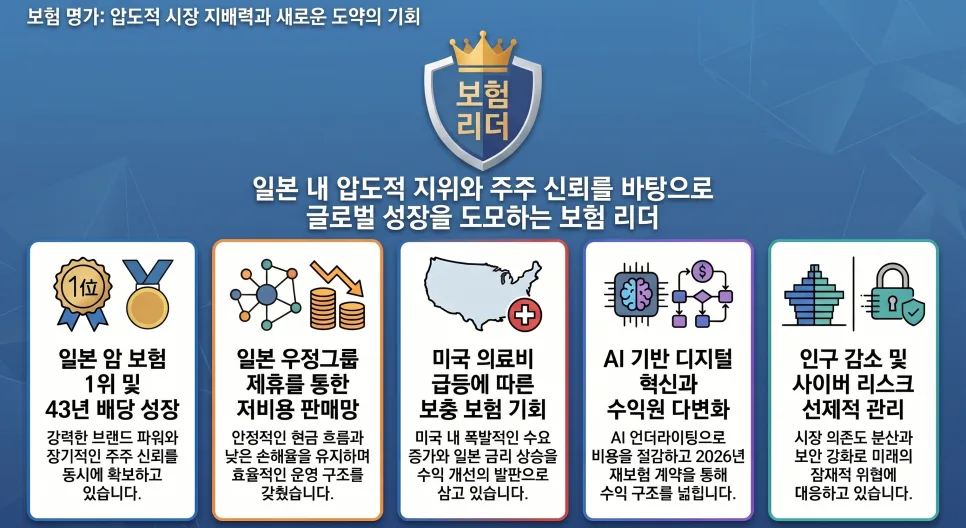
The global insurance industry is navigating significant shifts driven by aging populations and normalizing interest rates. In 2026, escalating healthcare costs in the U.S. are increasing individuals' medical expenses, fueling a surge in demand for supplemental insurance that offers lump-sum payouts for critical illnesses at an affordable price. This environment presents an ideal opportunity for Aflac. Furthermore, changes in the Bank of Japan's (BOJ) policies are leading to rising Japanese government bond yields, which could improve Aflac's investment income. While currency fluctuations, particularly the Yen to U.S. Dollar exchange rate, remain a risk, Aflac employs sophisticated hedging strategies and reinvests earnings in Yen-denominated assets to protect its cash flow.
What Are Aflac's Strengths and Weaknesses?
Aflac's most significant strengths include its powerful brand recognition, epitomized by the 'Aflac Duck,' and a consistent track record of 43 consecutive years of dividend growth. This reliability is particularly valued in the Japanese market, where Aflac is perceived as a trusted expert in cancer insurance, fostering strong customer loyalty. Its strategic alliance with Japan Post Insurance provides a low-cost distribution channel, and its stable cash flow is underpinned by low loss ratios. However, Aflac's substantial reliance on the Japanese market, with roughly 70% of its profits originating there, poses a significant risk due to currency volatility. The comparatively slower growth in the U.S. market also represents an area for potential improvement.
For detailed insights into Aflac's investment strategy, explore the original source.





