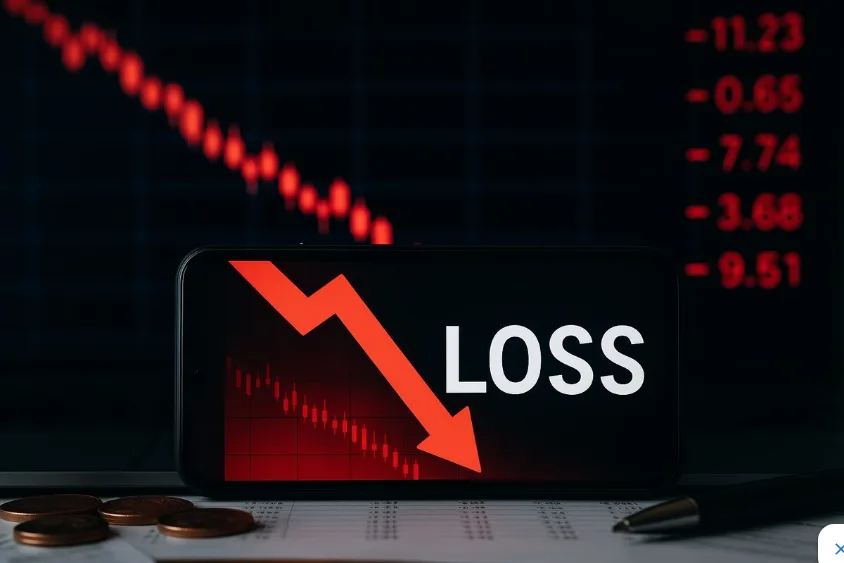
In the first half of 2026, individual investors experienced significant losses, averaging over 40% within a single month, due to failed bets against the market. This outcome was primarily driven by a misjudgment of market trends and an over-concentration in inverse leveraged products.
Why Did Individual Investors' 'Inverse Bets' Fail in 2026? Market Analysis
In April 2026, the South Korean stock market saw an unexpected surge of over 30%. Despite this, many individual investors, often referred to as 'ants' in the Korean financial community, poured over $350 million (542.5 billion KRW) into inverse leveraged products, betting on a market downturn. The most heavily purchased ETF by retail investors was 'KODEX 200 Futures Inverse 2X,' with substantial funds concentrated in this single product. This strategy was likely influenced by geopolitical tensions in the Middle East and the old Wall Street adage, 'Sell in May and go away.' However, the market defied these predictions, moving sharply upward.
What Was the Actual Loss for KODEX 200 Futures Inverse 2X? Real Investment Results

As the KOSPI index unexpectedly climbed, the 'KODEX 200 Futures Inverse 2X' ETF, a favorite among retail investors, recorded a staggering loss of -43.91% in just one month. This means nearly half of the invested capital vanished. This wasn't an isolated incident; all five inverse 2X leveraged ETFs tracking the KOSPI 200 experienced losses in the high 40% range, severely impacting retail investors. These products are designed to amplify market volatility by a factor of two, meaning that when the market moves against the investor's prediction, losses are doubled, leading to rapid capital erosion.
Are Inverse ETFs at Risk of Market Delisting? Real Cases and Outlook
A significant concern is the heightened risk of these inverse leveraged products being delisted from the market. Several of these products have seen their stock prices plummet to around $0.75 (100 KRW), and three now have net asset values below $3.75 million (5 billion KRW), putting them at risk of forced liquidation or delisting by the Korea Exchange. The ETN (Exchange Traded Note) market has already seen such cases. On April 29th, four inverse 2X KOSPI futures ETNs issued by major financial institutions like Mirae Asset, Samsung, KB, and Shinhan Securities were forcibly liquidated on the same day. This sudden event caused unexpected losses for investors and signals a potential for similar trading suspensions for related products in the future.
What Should Individual Investors Watch Out For When Betting Against the Market?
When individual investors decide to bet against the market, especially using leveraged products, several critical points must be considered. Firstly, inverse leveraged products amplify market volatility, meaning losses can accumulate extremely quickly if predictions are incorrect. Secondly, relying solely on external factors like geopolitical events or Wall Street adages is risky; markets are complex and can move in unpredictable directions. Thirdly, a thorough understanding of the product's structure and associated risks is essential. Products with low net asset values or low trading volumes carry higher liquidity and delisting risks. Therefore, before investing, carefully review the product's details and risk disclosures, and assess if it aligns with your risk tolerance. Consulting with a financial advisor is highly recommended.
For more detailed investment strategies, check the original source below.