Effectively remove coffee stains from clothes in 2026 without damaging fabric using common household items like sparkling water, vinegar, and dish soap. The key is immediate action: rinse with cold water, apply sparkling water to lift particles, and use a vinegar-dish soap mixture to break down stubborn pigments for a like-new restoration.
Why Are Coffee Stains So Stubborn on Clothes?
Coffee stains are notoriously difficult to remove because they contain not only water-soluble components but also tannins that deeply penetrate fabric fibers, along with microscopic oil residues. This is especially true for white or light-colored garments, where oxidized stains can become permanent over time. Therefore, acting within the 'golden hour' of stain occurrence with the right approach is crucial. Aggressively scrubbing or using hot water can damage the fabric and spread the stain, making it even harder to lift. A scientific method that targets the stain without harming the garment's texture is essential. In my experience, addressing a stain within an hour of its appearance yields the best results, and using cold water helps prevent protein-based components from setting.
What Supplies Are Needed for Coffee Stain Removal and Basic First Aid?
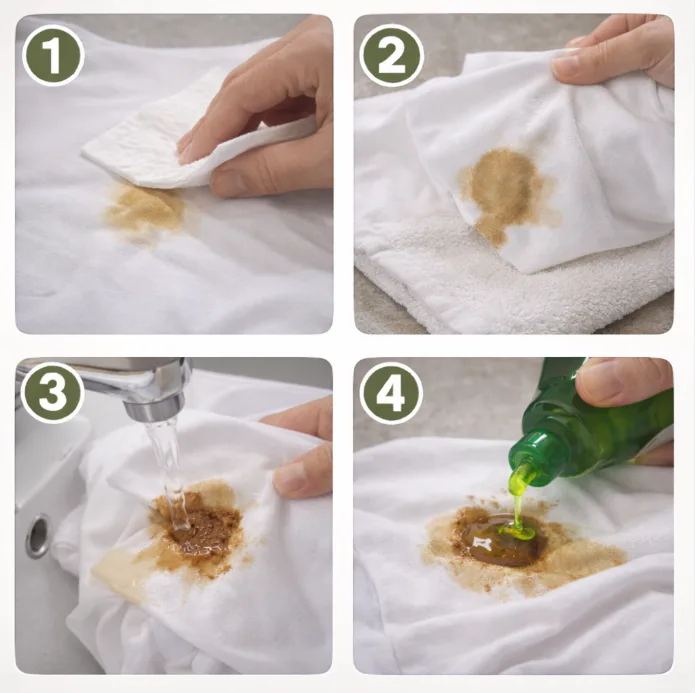
To tackle coffee stains effectively, you'll need a few key items. First, plain, unsweetened sparkling water helps physically lift the stain particles. Second, a mixture of white vinegar and dish soap acts as a neutralizer, breaking down the coffee's pigments and oils. Third, clean white cloths or paper towels are essential for absorbing the loosened grime. For lighter-colored clothing, baking soda can be added to absorb residual stains and offer a sanitizing effect. When a spill occurs, the most critical first step is to avoid rubbing. Instead, gently blot the surface with a dry towel or paper towel to absorb as much liquid as possible, preventing further spread. Follow this by lightly rinsing the affected area with cold water. If the coffee contained milk or sugar, a small amount of dish soap applied immediately can help break down the oily components.
What is the Principle Behind Using Sparkling Water's Bubbles to Extract Coffee Stains?
The tiny bubbles in sparkling water play a crucial role by penetrating fabric fibers and physically pushing coffee pigment particles outward. Saturate the stained area generously with plain sparkling water, then gently press with a clean cloth. You'll notice the bubbles lifting the coffee particles, which are then absorbed by the cloth, gradually fading the stain. Using fresh, actively carbonated sparkling water maximizes the stain-lifting efficiency. For more stubborn or widespread stains, soaking the garment in sparkling water for about five minutes can allow the carbonation to work deeper into the fibers, effectively removing even set-in coffee pigments. In my own trials, sparkling water alone significantly reduced lighter stains, proving it's a gentle yet effective method for stain management without causing fabric damage.
What is the Acidic Neutralization Method Using Vinegar and Dish Soap?
Combining vinegar and dish soap is a powerful technique for neutralizing coffee pigments and breaking down the subtle oils from the beans, proving particularly effective for older or darker coffee stains. Mix equal parts white vinegar and liquid dish soap, then apply the solution directly to the stained area. Let it sit for about 5 to 10 minutes, allowing the solution to penetrate and break down the stain. Afterward, rinse thoroughly with cold water. If the stain persists, you can repeat this process or try making a paste of baking soda and water, applying it to the stain for another 15 minutes before rinsing. This method minimizes fabric damage while effectively tackling tough stains. As with any cleaning solution, it's wise to test it on an inconspicuous area of the fabric first to ensure compatibility.
For more details, check the original source below.