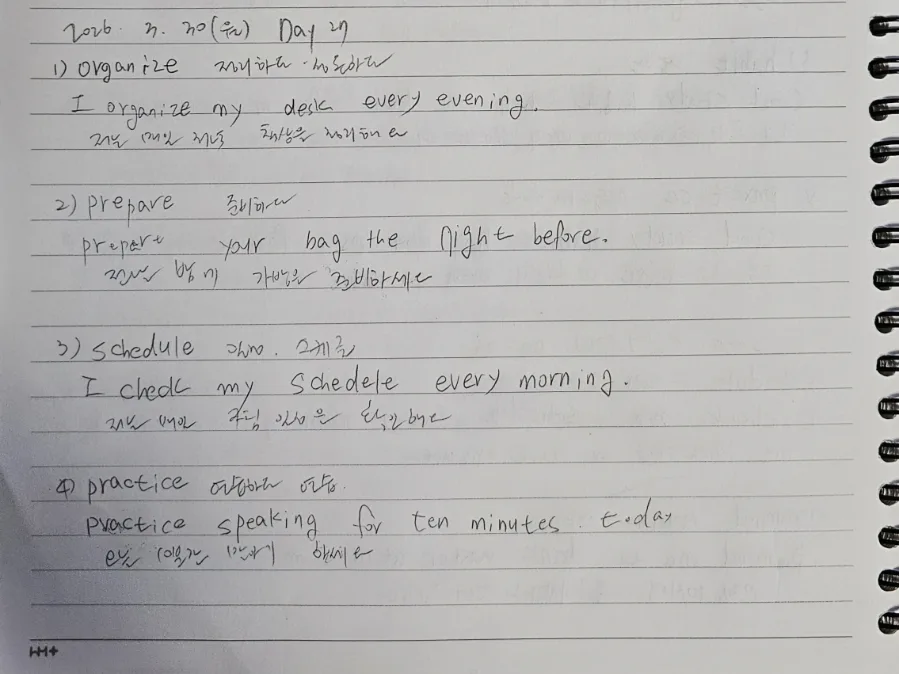
In 2026, mastering 5 English words daily is achievable with a practical 5-minute review routine. This guide provides step-by-step methods to boost your vocabulary efficiently, focusing on words like organize, prepare, schedule, practice, and progress.
How to Master 5 English Words Daily in Just 5 Minutes?
Consistency is your most powerful tool for improving English skills, especially vocabulary, which shows noticeable results quickly. Cultivating a daily habit of learning and reviewing new words is crucial. The five words introduced today are frequently used in real-life situations and will help elevate your English proficiency. Understanding their exact meanings and example sentences, and creating your own memorization tips, will make a significant difference. For instance, 'organize' can be easily remembered as 'to arrange' or 'to put in order' by connecting it to the word 'order.' Similarly, 'prepare' can be linked to the prefix 'pre-' (meaning beforehand) and 'pare' (to arrange), suggesting 'to get ready in advance.' Utilizing word origins or similar words can greatly enhance memorization.

Consistent review is key to memorizing English words.
Understanding English Words: From 'Organize' to 'Progress'
The five core words for today's lesson are 'organize,' 'prepare,' 'schedule,' 'practice,' and 'progress.' 'Organize' extends beyond just tidying physical items; it's also used for structuring work or plans systematically. 'Prepare' means to get ready in advance for an activity or situation, while 'schedule' refers to a list of planned activities for a day or a specific period. 'Practice' signifies the process of improving skills or abilities through repetitive actions, and 'progress' denotes advancement or development in the journey toward a goal. Grasping the meaning of each word through its example sentences is vital. For example, you can solidify the meaning with everyday sentences like, 'I organize my desk every evening.' Furthermore, connecting example sentences to your own learning situation, such as 'I can see progress in my English,' can be a great motivator.
English Word Review: A 5-Minute Practical Routine
Here’s a concrete routine to perfectly review five English words daily with just a 5-minute investment. For the first minute, slowly read aloud the word's pronunciation and meaning. In the next minute, read the example sentences containing each word naturally and clearly. Then, for the third minute, test your memory by looking only at the word and stating its meaning. During the fourth minute, fill in the blanks in the example sentences with the missing word. Finally, dedicate the last minute to intensively reviewing one or two words that you found most confusing, along with your memorization tips. Consistently practicing these five steps will maximize your word memorization efficiency and aid in transferring them to long-term memory.

It's important to consistently practice the 5-minute review routine daily.
Common Mistakes in English Word Learning
Many learners make a few common mistakes when trying to memorize English words. One frequent error is trying to memorize words in isolation without understanding their context. Words gain meaning through their usage in sentences and real-life situations. Simply memorizing a list of words without seeing them in action can lead to poor retention and difficulty using them correctly. Another common pitfall is inconsistent review. While learning new words is exciting, neglecting regular review means that previously learned words can be easily forgotten. This is why a structured review process, like the 5-minute routine, is essential for long-term vocabulary building. Additionally, some learners focus too much on passive memorization, like just reading definitions, instead of active recall methods such as using the words in sentences or explaining them aloud. Engaging actively with the words, using techniques like mnemonics or creating personal connections, significantly improves recall and understanding. For instance, when learning 'schedule,' try to think about your own daily schedule and how you'd describe it in English. This active engagement turns passive learning into an effective memory-building exercise.
For more details, check the original source below.