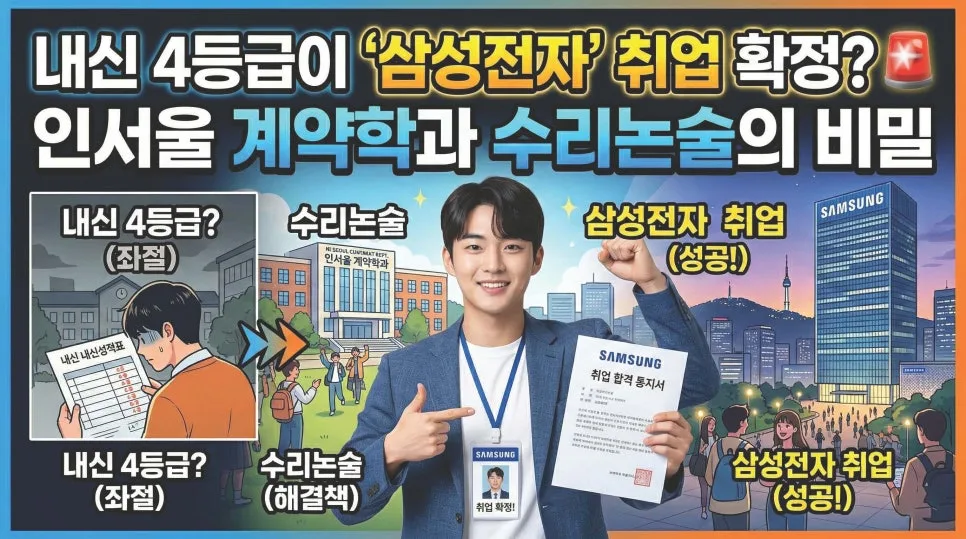
Students with a 4.0 GPA (equivalent to a C average in the US) can get accepted into top-tier Seoul-based contract majors and secure employment at major corporations like Samsung Electronics. These specialized programs, particularly in cutting-edge fields like semiconductors and mobility, offer a unique pathway to overcome limitations in traditional GPA-based admissions through the rigorous math-focused essay (Suri Nonsul) exam. With the addition of Sungkyunkwan University's Battery Science program in 2026, opportunities are expanding even further.
How Can a 4.0 GPA Student Get into Top Seoul Contract Majors?
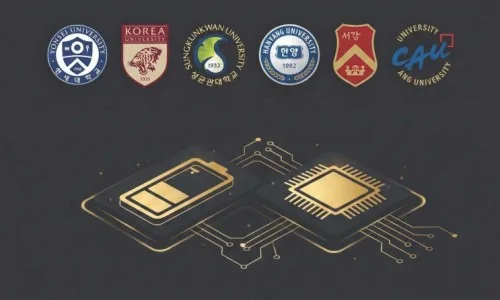
Many believe only students with top GPAs (A or B averages) can enter contract majors, but this isn't the whole story. Especially for advanced fields like semiconductors and mobility, the Suri Nonsul (math essay) exam provides a real chance for students with GPAs ranging from 3.0 to 5.0 (C to D average) to turn the tables. Many universities minimize the impact of GPAs in their essay-based admissions or reduce the score differences between grades, allowing strong essay performance to compensate for a lower GPA. For instance, Yonsei University's admissions are 100% essay-based with no GPA consideration. Hanyang University will eliminate student record 반영 starting in 2027 and introduce a minimum college entrance exam score requirement, which is expected to lower the actual competition. Korea University also heavily weighs essays (80%), reducing GPA's significance. Crucially, the actual competition rate often drops significantly because only about 30-40% of applicants meet the minimum college entrance exam score requirements, bringing the effective competition down to 5:1 or 8:1.
Suri Nonsul Strategy for Contract Major Admissions
Related Articles
For students aiming for contract majors with GPAs between 4.0 and 6.0 (C to D average), the absolute first priority is meeting the 'minimum college entrance exam score requirements.' Contract majors typically have higher thresholds than regular programs, and securing a top score (Level 1) in Math (Calculus) is crucial, accounting for about 70% of your admission chances. Furthermore, recent engineering math essays focus less on complex proofs and more on precise calculations and logical problem-solving. Therefore, start by practicing how to clearly articulate solutions for common college entrance exam math problems (levels 1-5, and problem 22). With the powerful incentives of 'guaranteed scholarships and employment,' maintaining motivation throughout your demanding study period is key. New programs like Sungkyunkwan University's Battery Science offer excellent opportunities.
Achieve a Consistent Level 1 Math Score with a 3-Step Curriculum
Many students achieve Level 1 in practice exams like the June and September mock tests but falter on the actual college entrance exam. This often stems from a lack of a solid strategy to 'lock in' that Level 1 math score for the minimum requirements. The 3-step curriculum used by top students in Daechi-dong (Seoul's elite education district) can help stabilize your math skills. In Step 1 (March-May), focus on solving challenging 'jun-killer' problems (problems 11-14, 20-21) within 30 minutes while practicing clear, logical explanations. In Step 2 (June-August), delve into advanced calculus topics, master time-saving techniques (like interpreting composite functions and trigonometric approximations), and study the structure of proofs for definite integrals, series, and differentiability, which are common in essay exams. In Step 3 (September-November), take one full-length practice exam weekly, focusing on solving within 100 minutes and then critically analyzing your own work against the grading rubric to identify and correct any potential point deductions.
Important Considerations for Contract Major Applications
When applying to contract majors, the most critical factor to consider is meeting the minimum college entrance exam score requirements. Many applicants fail simply because they excel in the essay portion but don't meet these essential score thresholds. Additionally, carefully evaluate the long-term vision of the companies offering these programs and ensure they align with your personal interests and career aspirations. Seeking advice from admissions consultants or mentors can provide valuable insights and help you navigate the application process effectively. For example, the newly established Battery Science program at Sungkyunkwan University in 2026 presents a growing area of opportunity within the advanced technology sector.